The timeless wisdom of Sufi poet Bakhat Gulam
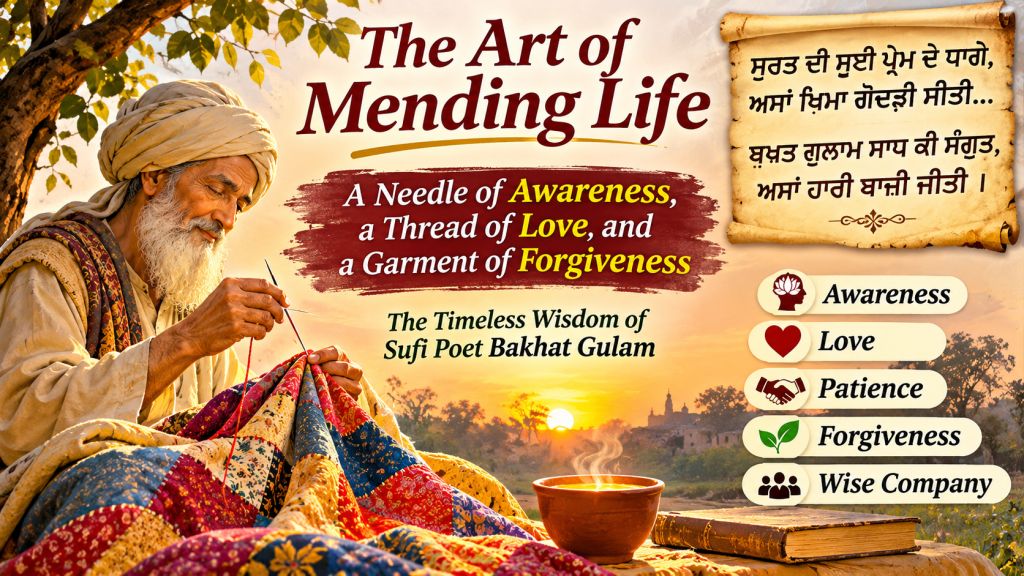
THE ART OF MENDING LIFE
Sometimes, the most profound lessons of life are hidden in a few simple lines of poetry. They do not come wrapped in complicated philosophical arguments or elaborate sermons. They touch the heart, awaken the mind, and leave us contemplating the very essence of human existence.
I recently came across these beautiful lines by the Sufi poet Bakhat Gulam. I was particularly touched by the simplicity of his metaphors and the depth of the philosophy they convey.
He speaks of resolving the complexities of life through awareness, love, patience and forgiveness. In just a few lines, he presents what could well be described as an art of living.
The Original Punjabi Poetry
ਸੁਰਤ ਦੀ ਸੂਈ ਪ੍ਰੇਮ ਦੇ ਧਾਗੇ,
ਅਸਾਂ ਖਿਮਾ ਗੋਦੜੀ ਸੀਤੀ,
ਗਇਆ ਸੀਤ ਭਰਮ ਸਭ ਮਨ ਕਾ,
ਅਸਾਂ ਓਢ ਸਿਰੇ ਪਰ ਲੀਤੀ।
ਦੂਰ ਭਈ ਮੇਰੇ ਮਨ ਕੀ ਚਿੰਤਾ,
ਅਸਾਂ ਪ੍ਰੇਮ ਪਿਆਲੜੀ ਪੀਤੀ।
ਬਖ਼ਤ ਗ਼ੁਲਾਮ ਸਾਧ ਕੀ ਸੰਗਤ,
ਅਸਾਂ ਹਾਰੀ ਬਾਜੀ ਜੀਤੀ।
Roman Transliteration
Surat di sui, prem de dhaage,
Assan khima godri seeti,
Gaya seet bharam sabh man ka,
Assan odh sire par leeti.
Door bhayi mere man ki chinta,
Assan prem pialri peeti.
Bakhat Gulam saadh ki sangat,
Assan haari baazi jeeti.
English Translation
With the needle of awareness and the thread of love,
I stitched a garment of forgiveness.
All doubts and illusions of the mind disappeared,
As I wore this garment from head to toe.
The anxieties of my mind drifted away,
For I had drunk from the cup of love.
In the company of saints and the wise,
Bakhat Gulam won the game he had seemingly lost.
The translation attempts to preserve the spirit and symbolism of the original rather than merely translate each word.
Let us explore the wisdom hidden in these beautiful verses.
1. Awareness — The Needle That Brings Things Together
Surat di sui — the needle of awareness.
A needle is a small instrument, but it has the power to bring two separated pieces of cloth together.
Similarly, awareness has the power to bring together the scattered fragments of our lives.
Most of our conflicts arise because we react without understanding. We allow anger, ego, prejudice and misunderstandings to dictate our responses. We hear, but do not listen. We see, but do not perceive. We speak, but do not reflect.
Awareness changes this.
It teaches us to pause before reacting, to understand before judging, and to reflect before speaking.
When we become conscious of our own thoughts, emotions and shortcomings, we begin to understand others as well.
Awareness is the beginning of reconciliation — with ourselves and with the world around us.
2. Love — The Thread That Connects Hearts
Prem de dhaage — the threads of love.
A needle alone cannot sew a garment. It needs a thread.
And what better thread can connect human beings than love?
Love is not merely an emotion or an expression of affection. It is an attitude towards life.
It is the willingness to understand another person’s perspective, to accommodate differences, to respect disagreements and to preserve relationships despite imperfections.
Love does not mean that we must always agree. It means that disagreement need not become hostility.
Where ego creates distance, love builds bridges.
Where hatred divides, love unites.
The thread of love can connect even those hearts that circumstances, misunderstandings and differences have separated.
3. Forgiveness — The Garment That Gives Us Shelter
Assan khima godri seeti — I stitched a garment of forgiveness.
Perhaps this is the most beautiful metaphor in the entire composition.
The poet does not merely speak of forgiving someone. He speaks of stitching a garment of forgiveness and wearing it.
Forgiveness, therefore, becomes something we live with.
We often carry the burden of past hurts, betrayals, disappointments and injustices. Sometimes, we spend years remembering what someone did to us.
But does holding on to resentment change the past?
Does anger heal our wounds?
Forgiveness does not mean approving wrongdoing, forgetting every lesson or allowing someone to hurt us repeatedly. It means refusing to let another person’s actions control our inner peace.
We can forgive while maintaining boundaries. We can let go without necessarily renewing a relationship.
Forgiveness liberates the person who forgives.
When we wear this garment of forgiveness, the cold winds of resentment, bitterness and hostility gradually lose their power over us.
4. The Cup of Love — An Antidote to Anxiety
Assan prem pialri peeti — I drank the little cup of love.
The poet now takes us from the external world of relationships into the inner world of the human mind.
He says that his anxieties disappeared after drinking the cup of love.
What a beautiful thought!
Much of our mental unrest comes from expectations, attachments, jealousy, comparisons and the constant desire to control things beyond our reach.
Love changes our relationship with the world.
When we learn to love without constantly expecting something in return, we become less anxious.
When compassion replaces jealousy, gratitude replaces comparison, and acceptance replaces resistance, the mind begins to find peace.
The cup of love is not a physical drink. It is an experience of consciousness — a state in which the heart becomes larger than the ego.
5. The Company of the Wise — Winning a Lost Game
Bakhat Gulam saadh ki sangat, assan haari baazi jeeti.
The poet concludes with another profound observation.
In the company of saints, wise people and spiritually awakened souls, he has won a game that he had apparently lost.
Life often presents us with situations where we believe we have lost everything.
We lose arguments, relationships, opportunities and sometimes even the confidence to move forward.
But wisdom teaches us that winning is not always about defeating another person.
Sometimes, winning means controlling our anger instead of retaliating.
Sometimes, it means accepting our mistakes instead of defending our ego.
Sometimes, it means forgiving someone instead of seeking revenge.
And sometimes, it means walking away from a conflict with our dignity and peace intact.
The company of wise and spiritually evolved people helps us see life from a different perspective. Their wisdom, conduct and humility become lessons that no textbook can adequately teach.
We may enter their company carrying the burden of defeat, but leave with the understanding that the real victory was never about winning against someone. It was about conquering ourselves.
The Larger Message — An Art of Living
What Bakhat Gulam has expressed in these few lines is, in essence, an entire philosophy of human relationships and peaceful living.
- Awareness helps us understand.
- Love helps us connect.
- Patience helps us endure.
- Forgiveness helps us heal.
- Wisdom helps us distinguish between what matters and what does not.
- The company of good people helps us evolve.
Imagine a world where people practised these principles.
How many family disputes could be resolved? How many friendships could be saved? How many misunderstandings could be avoided? How many wars of ego could end before they even began?
We cannot always change other people, their behaviour or their attitudes. But we can certainly change the way we respond to them.
And perhaps that is where the real transformation begins.
A Final Reflection
A needle of awareness, a thread of love, and a garment of forgiveness — these are not merely poetic expressions. They are tools for repairing the fabric of human relationships.
Let us learn to stitch rather than tear, to understand rather than condemn, to forgive rather than retaliate, and to love rather than hate.
For ultimately, the greatest victory in life is not winning an argument or defeating an adversary.
It is winning over ourselves.
And perhaps that is precisely what Bakhat Gulam means when he says:
ਅਸਾਂ ਹਾਰੀ ਬਾਜੀ ਜੀਤੀ।
We won the game we appeared to have lost.
A beautiful thought. A timeless philosophy. And above all, a way of life worth practising.
Reflections on Sufi Wisdom
Gurcharan Aulakh.
To watch above blogpost as video, please click.
MENDING LIFE | ज़िन्दगी संवारने की कला | ਜ਼ਿੰਦਗੀ ਸੰਵਾਰਨ ਦੀ ਕਲਾ — Sufi Wisdom
https://youtu.be/kXuJCUbaGIk


What a beautiful blend of Sufi wisdom, poetry and life philosophy! The metaphors of awareness as a needle, love as a thread and forgiveness as a garment beautifully explain the art of living. I particularly appreciate the message that awareness helps us understand, love connects hearts, and forgiveness brings peace to the mind.
LikeLike
Thank you for your valuable comment.
LikeLike