Harness Your Instincts. Master Yourself.
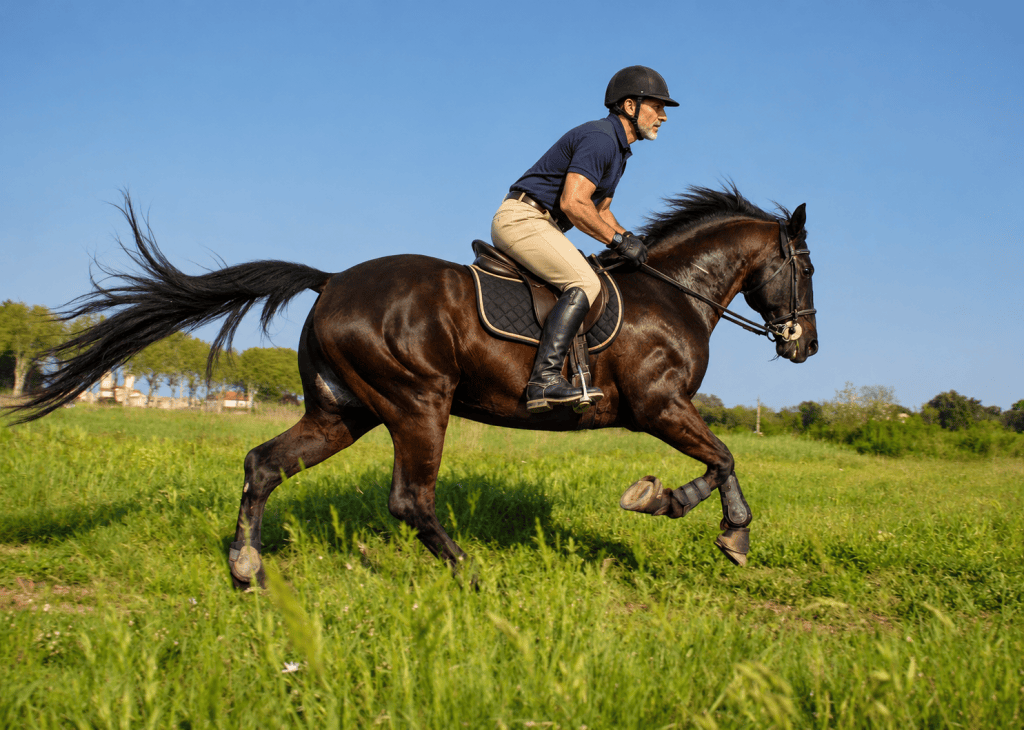
EVERYONE HAS A LITTLE WILDERNESS WITHIN!
Some have a garden. Others have an entire jungle!
And occasionally, even the most sophisticated gentleman or gentle lady discovers that a wild horse has been living somewhere inside, waiting for an opportunity to break loose!
That is perfectly normal.
After all, we are human beings, not programmed robots.
We have instincts, impulses, emotions, passions, desires, ambitions, and an occasional irresistible urge to throw caution to the winds.
Some call it animal instinct. Some call it our primitive nature. Others simply say, “That’s the real me!”
Whatever we call it, the wild exists in all of us.
The difference lies in its intensity, frequency, and, most importantly, how we manage it.
TWO RESIDENTS IN THE SAME HOUSE
Imagine that every human being has two permanent residents living inside.
One is Mr Wild.
He loves excitement, adventure, speed, passion, pleasure, competition, and instant gratification.
His favourite expression is:
“Come on! Life is short. Let’s have some fun!”
The other is Mr Sober.
He believes in moderation, patience, discipline, reflection, responsibility, and consequences.
His favourite expression is:
“Certainly, enjoy yourself. But have you thought about tomorrow?”
Both are important.
Unfortunately, Mr Wild is usually louder, while Mr Sober speaks softly.
And we all know what happens in a noisy household. The loudest fellow often gets his way!
But here is the interesting part.
Neither resident is necessarily your enemy.
The secret of a good life is not to evict Mr Wild. It is to ensure that Mr Sober retains the keys to the house.
THE WILD IS NOT ALWAYS WICKED
Let us not malign our wild side unnecessarily.
Without a little wilderness, life could become terribly dull.
Imagine a world where nobody ever took a chance, challenged convention, explored unfamiliar territory, fell passionately in love, laughed uncontrollably, or dared to dream beyond ordinary limits.
There would be no adventurers, few daring innovators, and perhaps very little excitement.
The same spirited energy that sometimes pushes us towards recklessness can also inspire extraordinary achievements.
A soldier charging forward in the face of danger, an explorer attempting an unfamiliar route, an entrepreneur risking a comfortable career, or an elderly person deciding to begin an entirely new adventure—all demonstrate the constructive side of human boldness.
Of course, courage is not the same as recklessness.
Courage understands danger and acts wisely. Recklessness ignores danger and calls itself courage.
A subtle distinction, but an important one.
So, by all means, let your wild horse gallop.
Just make sure you know where the cliff begins!
WHEN MR WILD HIJACKS THE DRIVER’S SEAT
The trouble begins when occasional excitement becomes habitual excess.
An occasional indulgence becomes a daily necessity.
Healthy competition becomes destructive obsession.
Confidence turns into arrogance.
Passion turns into possessiveness.
Adventure becomes an addiction to unnecessary risk.
And harmless entertainment slowly becomes a lifestyle that demands more and more stimulation.
What began as freedom can quietly become dependence.
The tragedy is that Mr Wild rarely announces when he has crossed the boundary.
He simply keeps whispering:
“Just once more!”
And sometimes that once more becomes the story of a lifetime.
THE SCIENCE BEHIND THE WILDERNESS
Modern psychology and neuroscience offer an interesting perspective on this inner struggle.
Human behaviour is influenced by interacting systems involved in emotion, reward, motivation, habit formation, and self-control.
The amygdala participates in processing emotionally significant situations, while reward-related brain circuits help motivate us towards pleasurable experiences.
The prefrontal cortex plays an important role in planning, weighing consequences, and regulating behaviour.
These systems do not operate as two completely separate personalities. They continuously interact.
Under conditions of intense emotion, stress, fatigue, or intoxication, our capacity for considered judgment may weaken.
This helps explain why a perfectly sensible person can occasionally make a remarkably foolish decision.
The same person who carefully negotiates a business contract may lose his temper over a parking space!
Or the gentleman who advises everyone about healthy living may suddenly discover that the third helping of dessert is an urgent national necessity.
The scientific lesson is simple:
An impulse is a signal, not an instruction.
We can experience a powerful urge without necessarily obeying it.
And that ability can be strengthened through practice.
EVEN ENTERTAINMENT NEEDS A BRAKE
Now comes a particularly interesting aspect of human behaviour.
We often associate self-discipline with work, duty, and responsibility.
But what about entertainment?
Isn’t entertainment supposed to be the one area where we can completely abandon restraint?
Not quite.
There is nothing wrong with laughing loudly, dancing enthusiastically, celebrating a victory, enjoying a delicious meal, or occasionally letting your hair down.
Indeed, recreation, social connection, playfulness, and laughter contribute to a fulfilling life.
But there is a difference between enjoying yourself and losing yourself.
The person who enjoys an evening and returns home refreshed has benefited from entertainment.
The person who repeatedly sacrifices sleep, health, dignity, relationships, or peace of mind in pursuit of entertainment may be paying a much higher price than the admission ticket suggests.
And here is a delightful irony:
Sometimes people work hard all week to earn peace, then spend the weekend doing everything possible to destroy it!
The problem is not pleasure.
The problem is pleasure without proportion.
THE WILD HORSE AND THE WISE RIDER
Consider a magnificent wild horse.
It possesses enormous strength, speed, energy, and spirit.
Would you destroy its spirit to make it obedient?
Certainly not.
A lifeless horse is of little use to anyone.
Instead, a skilled rider develops a relationship with the animal, understands its temperament, trains it patiently, and directs its energy towards a meaningful purpose.
The result is remarkable.
The horse retains its power.
But now that power has direction.
It can gallop when required, slow down when necessary, and stop before danger.
That is precisely what we should aspire to achieve with our own wild instincts.
Not suppression.
Not surrender.
REGULATION.
Let ambition propel you forward, but do not let it destroy your relationships.
Let passion enrich your life, but do not allow it to overpower judgment.
Let anger alert you to injustice, but do not permit it to dictate your response.
Let excitement make life colourful, but do not allow it to steal your sleep or peace of mind.
The objective is not to become a tame, timid creature.
It is to become a powerful, self-directed human being.
WHAT ANCIENT WISDOM TELLS US
Interestingly, this is hardly a new discovery.
The ancient Indian Katha Upanishad offers a beautiful metaphor.
The body is compared to a chariot, the senses to horses, the mind to the reins, and the intellect to the charioteer.
The teaching emphasises that when the senses are uncontrolled and the mind lacks discipline, the journey becomes difficult.
But when the intellect guides the mind and the senses are well directed, the traveller progresses towards the desired destination.
What an extraordinary metaphor!
Aristotle, too, explored the importance of moderation through his doctrine of the golden mean.
For Aristotle, virtue generally involved finding the appropriate balance between excess and deficiency, guided by practical wisdom.
For example, courage lies between cowardice and rashness.
The wisdom is not that every action must be reduced to a bland average. Rather, we must learn what is appropriate to the situation.
Whether we look towards Indian philosophy or Greek thought, a common message emerges:
Strength without judgment can become destructive. Judgment without courage can become ineffective.
The art of living requires both.
A PERSONAL LESSON FROM MILITARY LIFE
Military life offers a particularly useful illustration.
A good soldier requires aggression, courage, initiative, endurance, and the willingness to face danger.
Without these qualities, operational effectiveness would suffer.
But military training does not seek uncontrolled aggression.
It seeks disciplined aggression.
A soldier must know when to advance, when to hold position, when to exercise restraint, and when to stop.
An impulsive act may endanger not only the individual but also the entire team.
The same principle applies to civilian life.
The most effective person is not necessarily the one who possesses the greatest energy.
It is the one who knows how to employ that energy wisely.
Power is an asset. Uncontrolled power is a liability.
HOW DO WE TAME THE WILD?
The answer is not to become excessively serious or deny ourselves life’s pleasures.
A few practical habits can make an enormous difference.
1. Recognise your triggers.
Observe the situations that make you impulsive. Is it anger, excitement, boredom, social pressure, frustration, or the desire to impress others?
Awareness is the beginning of self-control.
2. Practise the pause.
When emotions run high, give yourself a few moments before acting.
Sometimes a short pause can prevent a very long regret.
3. Establish boundaries before excitement begins.
Decide how much time, money, energy, or indulgence you are willing to spend.
It is much easier to establish a boundary while calm than negotiate one with an overexcited Mr Wild.
4. Provide healthy outlets for your energy.
Exercise, sports, creative work, music, travel, meaningful challenges, and adventurous activities pursued with reasonable precautions can channel our restless instincts constructively.
5. Preserve your foundations.
Adequate sleep, physical activity, supportive relationships, and opportunities for quiet reflection help sustain emotional balance.
6. Learn to enjoy enough.
This may be one of life’s most underrated skills.
The ability to say, “I have enjoyed myself, and that is sufficient,” is a form of freedom.
Because someone who can never say enough may eventually discover that pleasure has become the master rather than the servant.
TOO MUCH OF EVERYTHING?
We often hear the saying:
“Too much of everything is bad.”
It is a useful reminder about excess, though it should not be treated as a mathematical law applying equally to every good thing.
The deeper principle is that even worthwhile activities can become harmful when pursued without regard to circumstances, responsibilities, or consequences.
Hard work is admirable, but chronic overwork can damage health.
Exercise is beneficial, but inadequate recovery can lead to injury.
Generosity is noble, but giving beyond one’s capacity can create hardship.
Even an obsession with perfect discipline can make life unnecessarily rigid.
The goal, therefore, is not merely moderation for its own sake.
It is INTELLIGENT BALANCE.
Know when to accelerate.
Know when to slow down.
And, above all, know when to stop.
THE FINAL THOUGHT: LET THE HORSE GALLOP, BUT HOLD THE REINS!
Life was never meant to be lived entirely in first gear.
There are moments when we must be adventurous, spontaneous, passionate, daring, and gloriously enthusiastic.
We should laugh, celebrate, explore, experiment, and occasionally do something delightfully unexpected.
A little wilderness keeps the spirit alive.
But an untamed wilderness can also consume the very happiness it promises.
So do not imprison your inner wild horse.
Train it.
Respect it.
Harness its extraordinary energy.
Allow it to gallop across the open fields of opportunity.
But never abandon the reins of judgment.
Because the greatest achievement is not to become completely wild or perfectly tame.
It is to remain free without becoming reckless, passionate without becoming destructive, and adventurous without losing your peace.
A wild horse may run faster, but a trained horse knows where it is going.
Perhaps that is the difference between merely living an exciting life and living a truly fulfilling one.
A THOUGHT TO CARRY THROUGH THE DAY
Let the wild within give you wings, but let wisdom decide where you fly.
TAME THE WILD. HARNESS ITS POWER. MASTER YOURSELF.
Random Thoughts — Gurcharan Aulakh


What an interesting and entertaining way to explore human nature! I particularly love the comparison between Mr Wild and Mr Sober. Both have their place in our lives, but wisdom lies in knowing when to let each one speak. As the saying goes, “Freedom is not doing whatever we want; it is knowing when to exercise restraint.” Let the wild horse gallop, but never surrender the reins! A thoughtful and enjoyable read. 👏
LikeLike