There are children among us who seem to belong to a slightly different world. They see life not through the complicated shades of grey that most adults inhabit, but through a clear, uncompromising lens of black and white. They are truthful, direct, fearless, and often disarmingly honest. Society calls them autistic, but many parents and teachers who live with them daily believe something deeper: these are souls wired differently.
They do not always follow the rules of ordinary communication. Some cannot speak for years, yet they understand far more than we imagine. Others speak, but think in ways that surprise us — noticing patterns, details, and connections that escape the rest of us.
To some people, they appear unusual. To those who love them, they are simply extraordinary.
A Grandfather’s Story
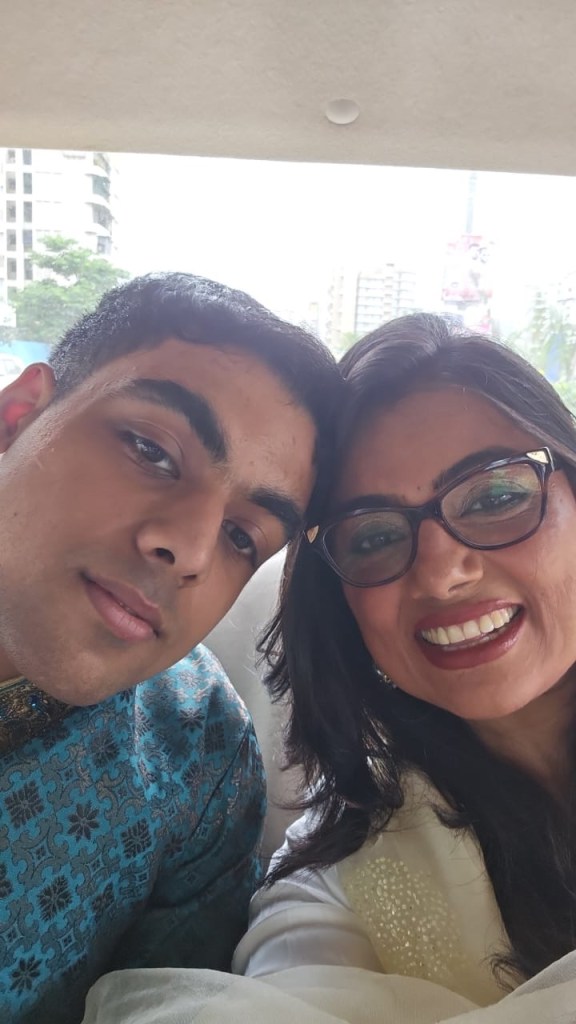
My own understanding of autism did not come from books at first. It came from my grandson, Jai.
Jai was a cheerful child, healthy in every medical sense. Doctors examined everything — hearing tests, CT scans, vocal cords. All reports were perfectly normal. Yet there was one puzzling reality: he did not speak.
Until the age of five, Jai remained non-verbal.
Relatives and acquaintances offered their opinions. Many simply dismissed the idea of autism.
“There is nothing like that,” they would say.
“He will speak on his own.”
But a mother’s intuition is powerful.
My daughter Rajni sensed that Jai needed a different approach. Instead of waiting helplessly, she began searching for answers. She read, researched, and studied everything she could find about autism. Eventually she made a life-changing decision.
She left her corporate career.
Rajni chose to dedicate herself completely to understanding and teaching children like her son. She trained herself to become an autism educator.
The First Word
The early days were full of challenges.
Jai could communicate by pointing. If he wanted water, he would simply point at the bottle. But he would not say the word.
Rajni realized something important: the child needed motivation to use speech.
One day she decided on a bold experiment. Jai would receive water only if he attempted to say the word — “water” or “paani.”
The struggle lasted a full day. Jai remained thirsty but still silent.
On the second day, something remarkable happened. With effort and hesitation, he spoke a broken word:
“Wa…ter.”
The bottle was immediately placed in his hands.
That moment changed everything.
It was the first step into language.
During the first month he learned five words. Then ten. Then twenty. Rajni worked patiently every day. Slowly Jai’s vocabulary grew.
Within a year he knew nearly five hundred words.
Learning the World
Speech was only the beginning. Academic learning presented new hurdles.
Mathematics and structured studies were particularly difficult. This was long before today’s artificial intelligence tools existed, yet Jai seemed to think in a way that resembled them. He did not rely on conventional logic.
Instead, he recognized patterns.
Gradually Rajni adapted her teaching methods to match his mind. She taught him through real-life experiences rather than textbooks alone.
He had no understanding of money, so she sent him to small shops to buy items. He learned by doing.
She took him to malls, banks, and post offices so he could observe how systems worked. He learned to travel in buses and trains, and eventually even airplanes.
Step by step, the mysterious patterns of the world began to make sense to him.
The School Challenge
Finding a school willing to admit Jai was another struggle.
Many institutions hesitated.
Rajni offered an unusual proposal:
“If you admit him and start a class for autistic children, I will teach them free for one year.”
Finally a school agreed.
Jai studied at Step by Step Noida School, where he faced not only academic challenges but also the harsh realities of childhood — teasing, misunderstanding, and bullying. Thereafter He changed many schools.
Yet he persevered.
When the results of his 10+2 board examinations at Mumbai were announced, Jai had scored 78.4 percent. For a child once considered incapable of learning, it was a remarkable achievement.
Later he completed his graduation in hotel management.
Entering the Real World
Even after graduation, another barrier awaited him — employment.
Several hotels refused to hire him. Employers often hesitate when they hear the word “autism.”
Eventually Jai received an opportunity at the Marriott Hotel near Delhi’s IGI Airport.
Workplace life was not easy. There were pressures, misunderstandings, and sometimes bullying from colleagues. But Jai endured.
Today he can travel independently across India by train, bus, or airplane. His memory is extraordinary. Like many individuals with savant abilities, he remembers dates, routes, and events with astonishing precision.
Ask him about a film he watched ten years ago, and he might tell you the exact date and day of the week.
And if he does not like someone, he will say it openly — with no diplomacy, no filters, only honest truth.
A Mother’s Mission
Rajni’s journey did not stop with Jai.
Her experience transformed her into a guide for countless other families. Today she trains and mentors thousands of mothers of autistic children, helping them understand that their children are not broken or hopeless.
They are simply different.
A Different Kind of Intelligence
Recently I watched the film Tanvi The Great, which tells the story of an autistic girl who dreams of joining the army.
While watching it, I could not help thinking of Jai.
Autistic children challenge our narrow definitions of intelligence. In many ways they remind us that human minds can function in many unique ways — much like the comparison between human intelligence and artificial intelligence.
Both are powerful, but both work differently.
Not a Liability — A Different Ability
Autistic children are not a burden. They are not failures. They are individuals with unique strengths, unique challenges, and often remarkable abilities.
What they need most is understanding, patience, and belief.
Behind every autistic child who succeeds stands a parent — often a mother — who refuses to give up.
Today I salute these brave souls:
the children who navigate a confusing world with courage, and the parents who walk beside them every step of the way.
Because they are not liabilities.
They are simply different stars in the same sky.
Guchi.
 Improve Your Life
Very nice.
LikeLike