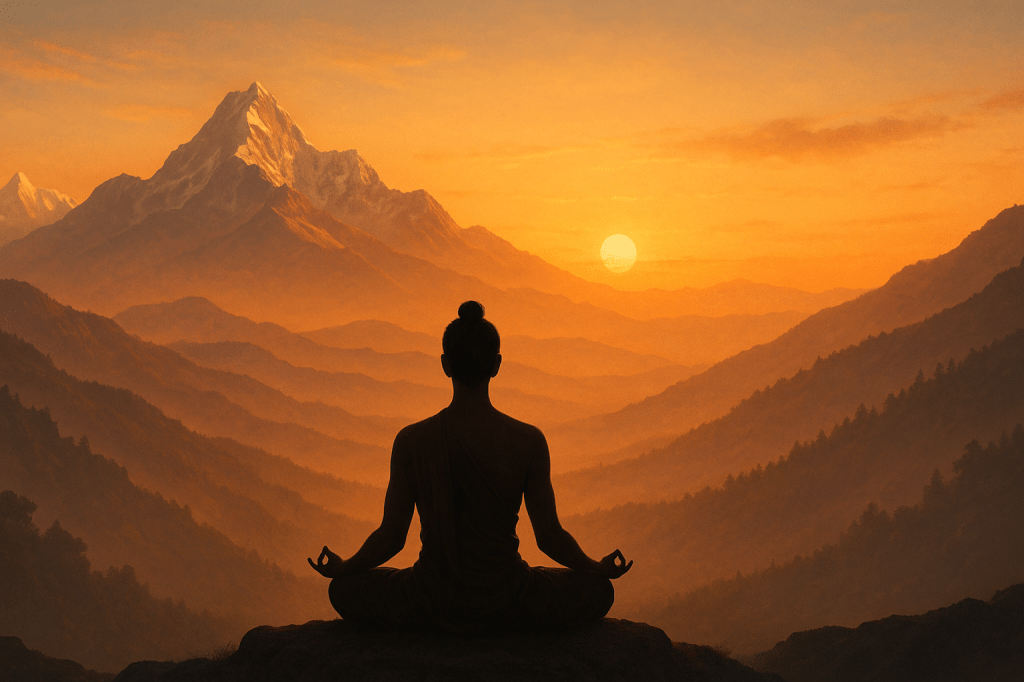
The Three Bodies of a Human Being in Hindu Philosophy
(Sthūla, Sūkṣma, and Kāraṇa Śarīra)
🪔 Introduction
Hindu philosophy views the human being not merely as a physical form, but as a layered composition of matter, energy, and consciousness. According to the Vedantic tradition, the human being consists of three bodies (Sharīra-traya):
1. Sthūla Śarīra – Gross Body
2. Sūkṣma Śarīra – Subtle Body
3. Kāraṇa Śarīra – Causal Body
This framework explains our experience across waking, dreaming, and deep sleep states and is central to the journey toward self-realization (Ātma-jñāna).
1. Sthūla Śarīra (स्थूल शरीर) – The Gross Body
Meaning:
The physical, visible body formed of five elements (pañca-mahābhūta):
• Pṛthvī (Earth)
• Āpas (Water)
• Tejas or Agni (Fire)
• Vāyu (Air)
• Ākāśa (Space/Ether)
This body is also called the Annamaya Kośa (food sheath), as it survives on food and is subject to birth, growth, decay, and death.
Sanskrit Reference (Tattvabodha):
“पञ्चीकृतपञ्चमहाभूतैः कृतं स्थूलशरीरम्।”
“Pañcī-kṛta pañca-mahābhūtaiḥ kṛtaṁ sthūla-śarīram.”
– The gross body is formed by the five grossified elements.
2. Sūkṣma Śarīra (सूक्ष्म शरीर) – The Subtle Body
Meaning:
The non-physical body which governs thoughts, emotions, sensory perception, and life-force. It comprises 17 components:
• 5 Jñānendriyas (organs of perception): eyes, ears, skin, tongue, nose
• 5 Karmendriyas (organs of action): hands, feet, speech, excretion, reproduction
• 5 Prāṇas (vital airs): Prāṇa, Apāna, Vyāna, Udāna, Samāna
• Manas (mind) and Buddhi (intellect)
This body continues after death and is responsible for karma and rebirth. It is active during dream (svapna) state.
Sanskrit Reference:
“सप्तदशाकलाभिः सूक्ष्मशरीरं भवति।”
“Saptadaśā-kalābhiḥ sūkṣma-śarīraṁ bhavati.”
– The subtle body is made of seventeen subtle elements.
3. Kāraṇa Śarīra (कारण शरीर) – The Causal Body
Meaning:
The seed-body formed of avidyā (ignorance) or potential impressions (samskāras). It is the subtlest layer and the cause of the other two bodies.
It is associated with deep sleep (suṣupti) and veils our true nature. This body carries karmic seeds from life to life and is connected to Ānandamaya Kośa (bliss sheath).
Sanskrit Reference (Taittirīya Upaniṣad):
“एकोऽहम् बहुस्याम्।”
“Eko’ham bahusyām.”
– “I am one; let me become many.”
This desire leads to the creation of Kāraṇa Śarīra.
4. Transcending the Three Bodies – Realizing the Self
The three bodies are not the real self. They are only coverings (upādhis) over the Ātman – the eternal, indivisible consciousness beyond name, form, and attributes.
Mandukya Upaniṣad Wisdom:
“नान्तःप्रज्ञं न बहिःप्रज्ञं… न किञ्चन प्रज्ञं। दृष्टान्तमात्रं… शिवमद्वैतम्।”
“Nāntaḥ-prajñaṁ na bahiḥ-prajñaṁ… na kiñcana prajñaṁ. Dṛṣṭāntamātram… śivam advaitam.”
– The Self is not the waking, dream, or deep sleep knower. It is the witness, pure, blissful, non-dual.
Conclusion
Understanding the three bodies offers profound insights into human nature, karma, and liberation. These concepts form the backbone of Indian spiritual thought. The journey of the seeker is to transcend identification with these layers and realize the true Self (Ātman) which is eternal, indivisible, and blissful – Sat-Chit-Ānanda.
Guchi (Researched from web Sources)
 Improve Your Life