When mustard fields turn gold, rivers swell with snowmelt, and the air carries the drumbeats of dhols—you know Baisakhi has arrived.
Celebrated every year on 13th or 14th April, Baisakhi is more than just a harvest festival. It is a profound tapestry woven with threads of agricultural joy, spiritual renewal, and revolutionary change. For farmers, it is thanksgiving. For Sikhs, it marks the birth of the Khalsa. And for all Indians, it’s a symbol of new beginnings. This year 2025, it is being celebrated on 13 April.
The Roots: A Farmer’s Festival
In Punjab and Haryana, Baisakhi celebrates the harvest of rabi crops—wheat, barley, and mustard. After months of toil in the fields, farmers rejoice at the abundance. Villages erupt with folk songs, bhangra, gidda, and vibrant fairs.
The early morning begins with a dip in sacred rivers, prayers at Gurudwaras, followed by community feasts (langars), and lively dancing. It’s a time when rural life celebrates its connection with nature and gratitude to the Divine for sustenance.
The Spiritual Turning Point: Birth of the Khalsa (1699)
But Baisakhi’s deepest resonance lies in Sikh history.
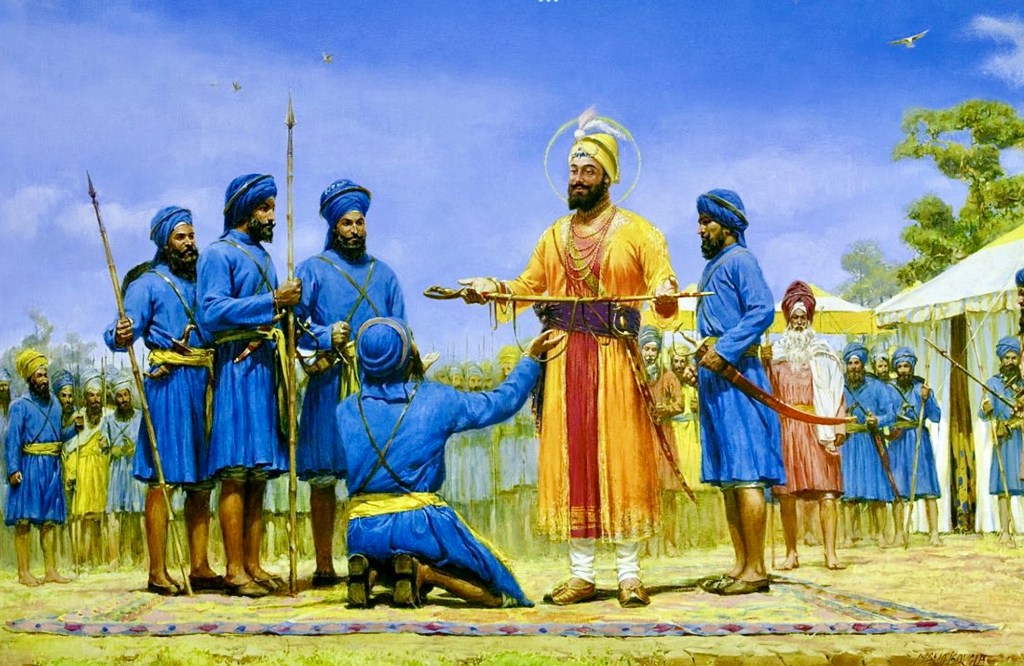
It was on Baisakhi day in 1699, at Anandpur Sahib, that Guru Gobind Singh Ji, the tenth Sikh Guru, gave birth to the Khalsa Panth—a spiritual and warrior brotherhood committed to justice, equality, and righteousness.
In front of a massive gathering, Guru Sahib asked, “Who is willing to give their head for the Guru?”
Five brave souls stepped forward, one by one. They were taken into a tent. To the horror of the crowd, blood was seen—but then emerged all five, alive, dressed in saffron robes and turbans.
These became the Panj Pyare (Five Beloved Ones), the first Khalsa.
Guru Gobind Singh Ji then took amrit (sacred nectar) from them—thus submitting himself to the Khalsa and establishing the principle of equality and shared leadership.
He gave the Khalsa their distinct identity:
Five Ks: Kesh (unshorn hair), Kangha (comb), Kara (steel bangle), Kachera (shorts), and Kirpan (sword)—symbols of courage, discipline, and moral responsibility.
More Than Just Sikhism: A Pan-Indian Celebration
Though most prominently celebrated in Punjab, Baisakhi has regional avatars across India:
• Assam: Rongali Bihu – celebrating the Assamese New Year and spring.
• Kerala: Vishu – symbolizing hope and prosperity.
• Tamil Nadu: Puthandu – welcoming the Tamil New Year.
• Bengal: Pohela Boishakh – a time for cleaning homes, wearing new clothes, and starting fresh accounts (Haal Khata).
• Bihar & Nepal: Maithili New Year – observed with rituals and folk traditions.
In every part of India, mid-April signifies solar new year, new crops, and renewed hopes.
Modern Relevance: Unity, Identity, and Service
Today, Baisakhi is celebrated with processions (Nagar Kirtans), martial art displays (Gatka), and community service. It reminds us of:
• Spiritual rebirth through inner discipline
• Equality and justice as practiced by the Khalsa
• Gratitude to farmers and the Earth
• Community bonding through sewa and langar
In a world often divided by caste, class, and religion—Baisakhi stands tall as a festival that unites the soil with the soul.
A Poetic Reflection
When golden wheat bends in breeze,
And dhol beats rise through village trees,
When rivers chant and swords shine bright,
And hearts are filled with Khalsa’s light…
It’s Baisakhi — of grain and grace,
Of brotherhood, courage, and divine embrace.
Conclusion
Baisakhi isn’t just a day marked on calendars. It’s a celebration of spirit, a revolution in robes, a dance of devotion, and a song of sovereignty.
Whether you stand in a Gurudwara in Amritsar, a field in Patiala, or even thousands of miles away—Baisakhi reminds you to rise, serve, and celebrate.
Guchi.
 Improve Your Life