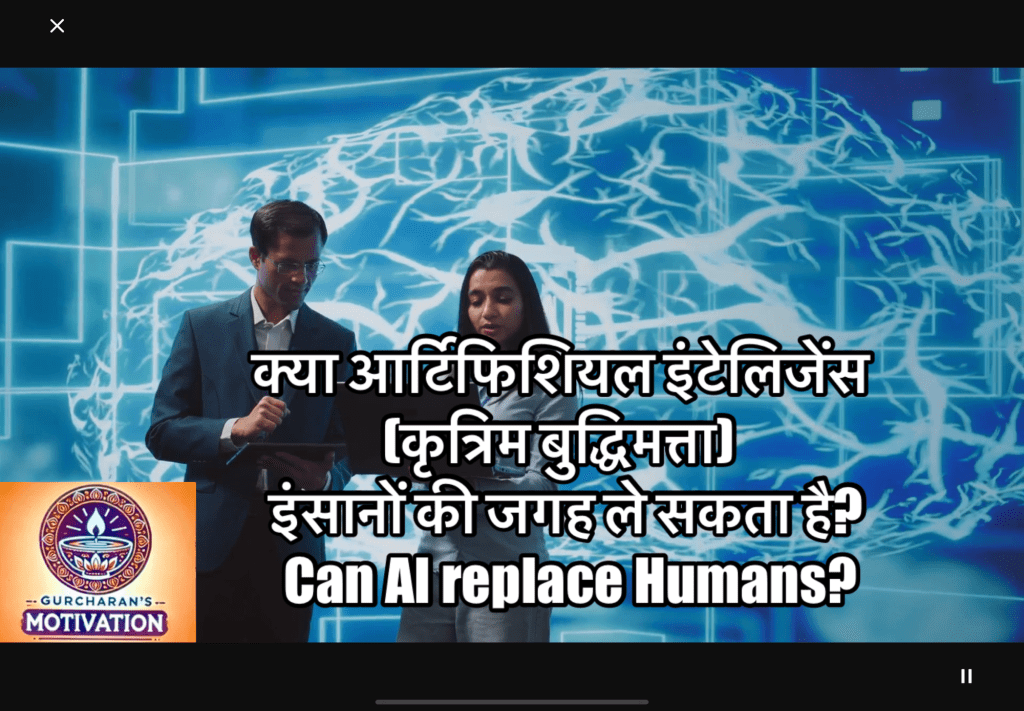
Artificial Intelligence (AI) is transforming the world at an unprecedented pace. It can process vast amounts of data, automate complex tasks, and even mimic human conversation. From customer service chatbots to self-driving cars, AI has proven to be highly efficient and intelligent. However, despite its rapid advancements, AI cannot replace humans entirely.
Two fundamental reasons stand out: AI lacks human empathy, and it struggles with common sense and adaptability. These are not just limitations; they are defining factors that set humans apart. Let’s explore these aspects with real-life examples.
AI Cannot Replace Human Empathy**
Empathy is the ability to **understand, share, and respond to the emotions of others**—a quality that makes humans deeply connected. While AI can analyze sentiment in text or recognize facial expressions, it does not “feel” emotions the way humans do.
Example: AI in Healthcare vs. a Human Doctor
Imagine a patient diagnosed with a serious illness. A doctor not only prescribes treatment but also offers comfort, reassurance, and moral support. A warm touch on the shoulder, a few encouraging words, or simply listening to a patient’s fears can make a world of difference.
Now, picture an AI-driven chatbot delivering the same diagnosis. It may provide accurate medical information, but it cannot understand the patient’s fear, offer genuine reassurance, or provide the human touch that is essential for healing.
This is why, even with the rise of AI in healthcare, human doctors, nurses, and caregivers remain irreplaceable. The emotional bond between a caregiver and a patient is something AI cannot replicate.
Example: AI in Customer Service vs. a Human Representative
Many companies use AI chatbots to handle customer queries. While these bots can answer frequently asked questions efficiently, they fall short when dealing with frustrated or emotional customers.
A human customer service representative can detect subtle emotions in tone, adjust their approach, and provide personalized solutions. AI, on the other hand, follows pre-set responses and often fails to de-escalate a situation when emotions are high. This is why companies still need human agents to handle complex and sensitive customer interactions.
AI Lacks Common Sense and Adaptability
AI functions based on data, algorithms, and patterns, but it struggles with real-world unpredictability. Unlike humans, who can think critically, adapt to new situations, and apply common sense, AI follows rigid logic.
Example: Self-Driving Cars and Unpredictable Situations
Self-driving cars are a revolutionary innovation, but they still require human intervention in unpredictable situations. Imagine a self-driving car moving through a busy street when a child suddenly chases a ball onto the road.
A human driver will instantly assess the situation, anticipate the child’s movements, and react instinctively, perhaps swerving safely or stopping abruptly. AI, however, might hesitate, misinterpret the event, or act too late because it lacks the common sense and instincts of human judgment.
This is why, despite advanced technology, fully autonomous vehicles are not yet widely trusted for real-world driving without human oversight.
Example: AI in Decision-Making vs. Human Judgment
AI can process vast amounts of data and recommend business strategies, but it lacks the intuitive decision-making ability that comes from human experience and wisdom.
For instance, a company using AI to decide which product to launch may get a data-driven recommendation based on market trends. However, a seasoned entrepreneur might feel that the market is shifting in a way that AI cannot predict. Based on gut instinct and experience, the entrepreneur might make a decision that AI would never suggest—yet turns out to be the right one.
This is why human leaders and decision-makers remain crucial, even in an AI-driven world.
Conclusion: AI is a Powerful Tool, Not a Replacement
AI is undoubtedly a game-changer, improving efficiency and automation across industries. However, its lack of empathy and common sense ensures that it will never fully replace humans.
Instead of fearing AI, we should embrace it as a tool that enhances human potential rather than replacing it. The future belongs to those who can blend AI’s efficiency with the uniquely human qualities of emotion, intuition, and adaptability.
So, while AI may assist, it is the human heart and mind that will always remain the true driving force of progress.
Guchi.
 Improve Your Life