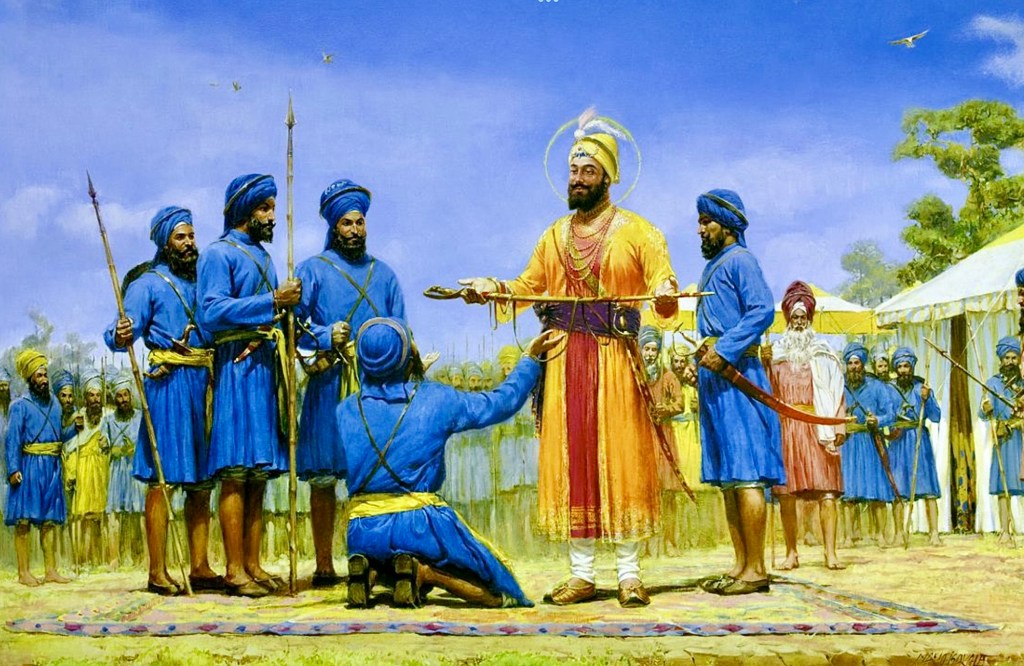
Safar-e-Shahadat, meaning The Journey of Martyrdom, marks one of the most tragic and pivotal chapters in Sikh history. These events in December serve as a stark reminder of the unparalleled sacrifices made by Guru Gobind Singh Ji, his family, and his loyal followers to uphold righteousness and resist tyranny. This article recounts the chronological events, their historical context, and their enduring significance.
6 Poh | 20 December
Guru Gobind Singh Ji Leaves Anandpur Sahib
Amidst the siege of Anandpur Sahib by the combined Mughal and Hill Rajas’ forces, Guru Gobind Singh Ji and his family were forced to leave Qila Sri Anandpur Sahib. This happened after assurances of safe passage were given under oath by the enemy forces. However, these promises were deceitful, and betrayal awaited the Guru’s family and Sikhs.
As Guru Gobind Singh Ji left the fort with his family and other Gursikhs, the stage was set for a series of heartbreaking sacrifices.
7 Poh | 21 December
Separation at River Sirsa
The Guru’s family faced yet another challenge as they reached the cold and tumultuous waters of the River Sirsa. During the crossing, the family became separated amidst the chaos caused by enemy attacks and the treacherous river currents.
This separation divided the Guru’s family into three parts:
1. Guru Gobind Singh Ji and a few Sikhs proceeded toward Chamkaur.
2. Mata Gujri Ji and the younger Sahibzaade (Baba Zorawar Singh Ji and Baba Fateh Singh Ji) got separated and Gangu, the cook of Guru Gobind Singh took them to his house to give shelter. However he became greedy and to get rewarded he informed Mughal authorities who captured them.
3. The elder Sahibzaade (Baba Ajit Singh Ji and Baba Jujhar Singh Ji) accompanied Guru Ji to Chamkaur Garhi.
The separation marked the beginning of unimaginable trials for the Guru’s family.
8 Poh | 22 December
Martyrdom of Vadde Sahibzaade—Baba Ajit Singh Ji & Baba Jujhar Singh Ji.
At Chamkaur Garhi, Guru Gobind Singh Ji and his small band of Sikhs bravely fought against thousands of Mughal soldiers. Baba Ajit Singh Ji, the eldest son of Guru Gobind Singh Ji, at the tender age of 18, asked for permission to enter the battlefield. He valiantly fought and attained martyrdom.
Following in his brother’s footsteps, Baba Jujhar Singh Ji, only 14 years old, also sought the Guru’s blessing to sacrifice his life in battle. Both brothers epitomized courage, fearlessness, and devotion to their father’s teachings.
9 Poh | 23 December
Martyrdom of Sikhs in Chamkaur Garhi.
As the battle continued, Chamkaur Garhi became a fortress of resistance. Guru Gobind Singh Ji’s remaining loyal followers, including many brave Sikhs, achieved martyrdom in this unequal battle. Their sacrifice demonstrated the indomitable spirit of the Khalsa in standing against injustice and tyranny, regardless of the odds.
10 Poh | 24 December
Martyrdom of Bibi Harsharan Kaur
During this period, Bibi Harsharan Kaur, a devout Sikh woman, attained martyrdom. Her sacrifice is symbolic of the role played by women in Sikh history who displayed unmatched bravery, faith, and resilience in the face of oppression.
11 Poh | 25 December
Chhote Sahibzaade and Mata Gujri Ji Captured
After their separation, Mata Gujri Ji and the two younger Sahibzaade—Baba Zorawar Singh Ji (9 years old) and Baba Fateh Singh Ji (7 years old) were brought to Sirhind. They were imprisoned in the cold Thanda Burj (cold tower), where they endured extreme winter conditions.
Despite their tender age, the Chhote Sahibzaade exhibited unwavering courage and refused to renounce their faith or bow before the Mughal authorities.
12 Poh | 26 December
Chhote Sahibzaade Appear Before Wazir Khan.
The young Sahibzaade were presented before Wazir Khan, the governor of Sirhind. He tried to lure them with promises of wealth and power if they converted to Islam. When they refused, they were threatened with execution. The Sahibzaade’s steadfastness and refusal to compromise their faith remain a profound example of courage.
13 Poh | 27 December
Martyrdom of Chhote Sahibzaade and Mata Gujri Ji
On this day, Wazir Khan ordered the execution of Baba Zorawar Singh Ji and Baba Fateh Singh Ji. They were bricked alive but remained unshaken in their commitment to Sikhi.
Mata Gujri Ji, their grandmother, received news of their martyrdom while imprisoned in the Thanda Burj. Unable to bear the grief and physical hardships, she also left this world, becoming a symbol of sacrifice and maternal strength.
14 Poh | 28 December
Cremation of Shaheed Sahibzaade and Mata Gujri Ji
The bodies of Baba Zorawar Singh Ji, Baba Fateh Singh Ji, and Mata Gujri Ji were cremated. This day concludes the Safar-e-Shahadat
a journey marked by immense sacrifices.
Legacy of Sacrifice
The events of Safar-e-Shahadat highlight the profound sacrifices made by Guru Gobind Singh Ji, his family, and the Sikh community. Their courage and commitment to justice laid the foundation for future generations to stand against tyranny and oppression.
These martyrs’ sacrifices remain a source of inspiration, reminding humanity of the values of faith, resilience, and righteousness. The Sahibzaade’s unyielding spirit continues to echo across history, encouraging us to uphold truth, even in the face of adversity.
Conclusion
The Safar-e-Shahadat is not merely a historical account but a timeless testament to the power of faith and sacrifice. The martyrdom of Guru Gobind Singh Ji’s family and the Sikhs at Chamkaur and Sirhind is remembered annually with reverence. Their story teaches us that principles of justice, truth, and freedom are worth any sacrifice, no matter how great.
As we honor their memory, let us reflect on their unwavering spirit and strive to embody their virtues in our lives.
 Improve Your Life