The Foundation and Evolution of Sikhism: From Guru Nanak Dev to Maharaja Ranjit Singh and till Modern Times. ikhism, one of the youngest major religions in the world, was founded in the 15th century by Guru Nanak Dev Ji. It is a monotheistic faith that emphasizes equality, social justice, and devotion to God. The religion evolved through the teachings of the ten Sikh Gurus, who laid down the foundation of Sikh beliefs, practices, and institutions. Over time, Sikhism grew in influence and played a crucial role in Indian history, particularly through the formation of the Khalsa, the leadership of Maharaja Ranjit Singh, and the involvement of Sikhs in India’s struggle for independence.
Foundation of Sikh Religion: Guru Nanak Dev Ji (1469-1539)
The seeds of Sikhism were sown by Guru Nanak Dev Ji, born in 1469 in the village of Talwandi (now Nankana Sahib in Pakistan). Guru Nanak was deeply moved by the social inequalities, caste divisions, and religious dogma prevalent in the Indian subcontinent. Rejecting the rituals and superstitions of both Hinduism and Islam, he preached a simple message of love, unity, and devotion to one universal God.
Guru Nanak’s key teachings included:
-Ek Onkar. The belief in one God.
– Equality. All human beings are equal, irrespective of caste, creed, or gender.
– Sewa (selfless service) and Simran (remembrance of God)as essential for a fulfilled life.
Guru Nanak’s message quickly spread across northern India as he traveled extensively, engaging in interfaith dialogues and setting up communities of followers called Sangat. His teachings were documented in his compositions, which later formed part of the Guru Granth Sahib, the Sikh holy scripture.
The Ten Sikh Gurus and the Growth of the Sikh Faith.
After Guru Nanak, nine successive Gurus continued his mission and strengthened the religious and social framework of Sikhism.
1. Guru Angad Dev Ji (1504-1552). He introduced the Gurmukhi script, which played a crucial role in unifying the Sikh community by giving them a distinct script and identity.
2. Guru Amar Das Ji (1479-1574). He institutionalized the Langar system, a community kitchen where all people, regardless of background, shared a meal, symbolizing equality.
3. Guru Ram Das Ji (1534-1581). He founded the city of Amritsar, which would become the spiritual center of Sikhism.
4. Guru Arjan Dev Ji (1563-1606). He compiled the Adi Granth, the sacred scripture of Sikhism, and built the Harmandir Sahib (Golden Temple) in Amritsar. He was martyred under Mughal Emperor Jahangir, marking a turning point toward Sikh militarization.
5. Guru Hargobind Ji (1595-1644). He introduced the concept of Miri-Piri, the dual aspect of spiritual and temporal authority. Guru Hargobind carried two swords representing these principles and began to militarize the Sikh community for self-defense.
6. Guru Har Rai Ji (1630-1661)and Guru Har Krishan Ji (1656-1664). They further expanded the Sikh community.
7. Guru Tegh Bahadur Ji (1621-1675). Guru Tegh Bahadur defended religious freedom by opposing Mughal Emperor Aurangzeb’s forced conversions of Hindus to Islam. He was martyred, becoming a symbol of resistance against tyranny.
8. Guru Gobind Singh Ji (1666-1708). The tenth Guru, Guru Gobind Singh Ji, transformed the Sikh community into the Khalsa, a brotherhood of saint-soldiers dedicated to righteousness and justice.
The Formation of the Khalsa: 1699
In 1699, on the festival of Baisakhi, Guru Gobind Singh established the Khalsa at Anandpur Sahib. He initiated five Sikhs, known as the Panj Pyare (Five Beloved Ones), by baptizing them with Amrit (sweetened water stirred with a double-edged sword). The Khalsa was bound by five physical symbols known as the Five Ks.
– Kesh (uncut hair)
– Kanga (a wooden comb)
– Kara. (a steel bracelet)
– Kachera (a cotton undergarment)
– Kirpan (a ceremonial sword)
The Khalsa was tasked with defending the faith and standing against oppression, emphasizing the Sikh values of bravery, sacrifice, and equality.
Struggle After Guru Gobind Singh: Banda Singh Bahadur and the Misals.
After the death of Guru Gobind Singh in 1708, the Sikh leadership passed to Banda Singh Bahadur a disciple of the Guru. Banda Bahadur waged a successful battle against the Mughal Empire, winning key battles and establishing Sikh rule in parts of Punjab. However, he was eventually captured and executed in 1716.
Following Banda Bahadur’s martyrdom, the Sikh community faced constant persecution under Mughal and Afghan rule. The Sikhs organized themselves into Misals, semi-autonomous military bands led by Sikh chiefs. These Misals engaged in guerrilla warfare and gradually expanded their influence across Punjab.
The Rise of Maharaja Ranjit Singh and the Sikh Empire
By the late 18th century, Maharaja Ranjit Singh (1780-1839) united the Misals and established the powerful Sikh Empire in 1799, with Lahore as its capital. Ranjit Singh’s reign was marked by religious tolerance, modernization of the army, and administrative reforms. His secular rule saw Hindus, Muslims, and Sikhs coexist peacefully. Under his leadership, the Sikh Empire stretched from Kashmir to Peshawar, becoming one of the most formidable powers in the Indian subcontinent.
Sikhs in the Independence Movement of India
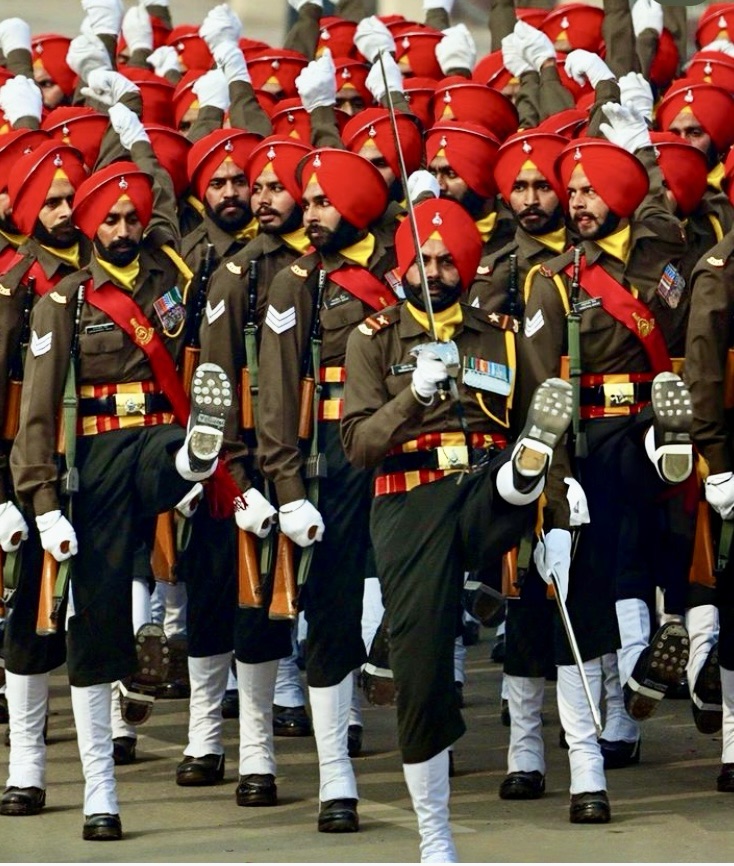
After the decline of the Sikh Empire following Ranjit Singh’s death, Sikhs played a vital role in resisting British colonial rule. They became prominent figures in the Indian National Congress and the Ghadar Movement, which sought Indian independence from abroad. Sikh leaders like Bhagat Singh, Udham Singh and Kartar Singh Sarabha became icons of the freedom struggle, known for their fearless defiance of British rule. Many Sikh soldiers participated in First and Second World War during British India period in theatres of war in various parts of the world.
Post-Independence Contributions of Sikhs
Post-independence, Sikhs continued to play a crucial role in India’s development. They were instrumental in the Green Revolution in Punjab, which transformed India into a food-sufficient nation. Sikhs also serve prominently in the Indian military, business, education, and politics. Some of the key politicians amongst Sikhs have been Late S. Sawarn Singh, Indian’s Former Foreign Minister, Late Gilani Zail Singh, Former President of India and Sh Manmohan Singh Former Prime Minister of India.
Tenets of Sikhism
The core principles of Sikhism are:
1. Meditation on God’s Name (Naam Japna). Sikhs are encouraged to remember and meditate on God’s name at all times.
2. Earning an Honest Living (Kirat Karni). Hard work and ethical living are essential.
3. Sharing with Others (Vand Chakna). Sikhs are urged to share their wealth and resources with those in need.
Other important tenets include:
– Equality. All humans are equal, regardless of caste, creed, or gender.
– Seva (Selfless Service). Serving humanity is a key pillar of Sikh practice.
– Rejection of Rituals. Sikhism rejects blind rituals and superstitions.
Spread of Sikhs Across the World
Today, the Sikh diaspora is spread across the globe, with significant populations in countries like Canada, the United States, the United Kingdom, Australia, and Malaysia. Sikh immigrants have made substantial contributions to the social, economic, and cultural fabric of their host nations while maintaining their religious and cultural identity. Gurudwaras (Sikh temples) serve as community hubs where Sikhs gather for worship and community service, fostering a spirit of unity and inclusiveness.
Conclusion
From Guru Nanak Dev Ji’s humble beginnings to the formidable leadership of Maharaja Ranjit Singh, Sikhism has emerged as a religion founded on principles of justice, equality, and devotion. The formation of the Khalsa cemented the role of Sikhs as protectors of these values. Through centuries of struggle, Sikhs have continued to stand for righteousness, making invaluable contributions to India’s independence and global communities. Sikhism’s message of universal brotherhood and selfless service continues to resonate worldwide, inspiring millions to lead lives of compassion, humility, and courage.
(Compiled From Sikh History various references and web resources)
Please watch my YouTube Documentary made on the above
Subject. Do subscribe to my Youtube channel http://www.youtube.com/@guchiaul
Link for the Documentary.
Guchi.
 Improve Your Life