Exploring the Tapestry of Ancient Civilizations in Cancun: A Journey Through Time
From the pristine white sands of Cancun to the awe-inspiring ruins of Chichen Itza, my recent trip to Mexico was an enriching journey through history, culture, and natural beauty. From August 23rd to August 28th, 2024, We had the pleasure of staying at the Oleo Resort, a beachside haven nestled along the Mexican Bay. The resort’s stunning location, with its white and blue sands and crystal-clear waters, set the tone for what would be an unforgettable exploration of Mexico’s rich heritage and its connections to other ancient civilizations.
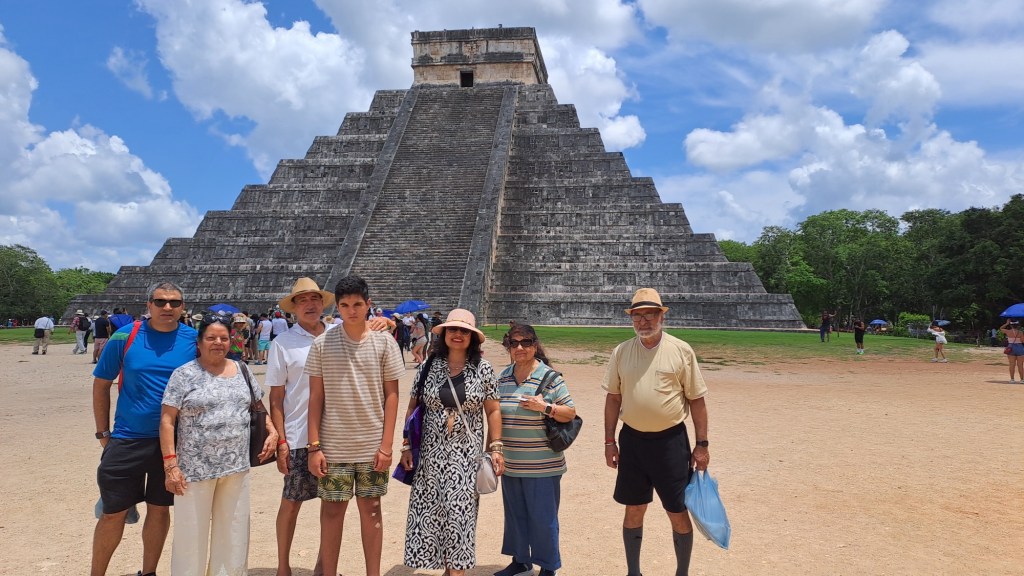
Day 1: A Marvel of Ancient Architecture at Chichen Itza
Our adventure began on August 24th with a visit to the legendary ruins of Chichen Itza, one of the most significant remnants of the Mayan civilization. As we wandered through the ancient city, the grandeur of its architecture left us in awe. The towering pyramids, intricate carvings, and vast ball courts bore testimony to a civilization that thrived over 2,000 years ago.
The Mayans were not only skilled architects but also advanced scientists. Their knowledge of astronomy and time measurement was unparalleled, as evidenced by the precise alignment of their structures with celestial bodies. The heliograph system they developed—a language of its own—demonstrated their sophisticated understanding of communication and information dissemination.
One of the most striking aspects of the Mayan civilization was their deep reverence for the sun god, whom they believed required human sacrifices to be appeased. This belief system was central to their religious practices and influenced many aspects of their daily lives. The ball games played in the grand courts of Chichen Itza were more than mere sport; they were a ritualistic event where the stakes were life and death. The defeated players were often beheaded and offered as sacrifices to the gods, a practice that echoes the brutal spectacles of the Roman Colosseum.
As I stood amidst the ruins, I couldn’t help but draw parallels between the Mayan civilization and the ancient Hindu civilization of India. Both cultures worshipped celestial beings, including the sun and moon, and developed intricate rituals to honor their gods. The Mayans and Hindus both had a profound understanding of astronomy and time, which they incorporated into their religious and cultural practices. This shared reverence for the cosmos and the divine created a spiritual connection that transcended time and geography.
Day 2: The Coastal Beauty of Tulum and a Glimpse into Mexico’s History
The following day, we ventured south to Tulum, a coastal town that once served as a major port for the Mayan civilization. Tulum’s stunning location along the Caribbean Sea provided breathtaking views, and the ruins perched on the cliffs offered a unique blend of history and natural beauty. The fortifications of Tulum, built to protect against invasions, stood as a testament to the strategic brilliance of the Mayans.
In the evening, we attended a captivating light and sound show that narrated the last 600 years of Mexican history. The show took us on a journey from the ancient civilizations that once thrived in the region, through the arrival of the Spanish conquistadors, to the eventual independence of Mexico. It was a poignant reminder of how the rich tapestry of Mexico’s history has been shaped by both indigenous cultures and European influences.
As I reflected on the history of Mexico, I was struck by the similarities and differences between the fate of the indigenous civilizations in the Americas and those in the Indian subcontinent. When Christopher Columbus discovered the Americas, it marked the beginning of a new era—one that saw the arrival of European colonizers who would drastically alter the course of history. The Spanish conquest led to the conversion of the native populations to Christianity, often by force, and the eventual erasure of many aspects of their original cultures.
In contrast, despite centuries of invasions and colonization, India managed to retain its ancient civilization and spiritual traditions. From the arrival of the Mughals to the British Raj, India’s Sanatan Dharma and cultural identity remained resilient. While Christianity and Islam spread across other parts of the world, India’s spiritual foundation remained largely intact, allowing it to preserve its unique heritage.
Day 3: A Dive into the Underwater Wonders of Cancun
On our third day, we decided to explore the natural beauty of Cancun’s underwater world. Snorkeling in the warm, clear waters of the Caribbean Sea was an otherworldly experience. We visited an underwater museum, a fascinating site where art and nature blend seamlessly. The museum featured sculptures that had become home to a diverse array of marine life, from colorful corals to schools of vibrant fish, turtles, and even small sharks.
As I floated above this underwater gallery, I marveled at the beauty and diversity of life beneath the surface. It was a reminder of how interconnected we all are, not just with each other but with the natural world. The ocean, like the civilizations we had explored on land, had its own history and secrets waiting to be discovered.
Reflections: The Resilience of Civilizations
Our journey through Cancun and its surrounding areas offered more than just a vacation; it was an exploration of the resilience and adaptability of civilizations across time. The Mayan civilization, with its remarkable achievements in science, architecture, and spirituality, left an indelible mark on the world. Yet, like many other indigenous cultures, it was eventually overshadowed by European colonization.
However, as I compared the fate of the Mayans with that of India, I found a sense of pride in the fact that India’s ancient civilization managed to withstand the test of time. Despite waves of foreign invasions, India retained its cultural and spiritual identity, making it one of the few places in the world where an ancient civilization continues to thrive.
Our trip to Cancun was not just a journey through space, but through time—a journey that allowed us to connect with the ancient past while appreciating the present. Thanks to my daughter, who made this trip possible, we were able to experience firsthand the rich history and vibrant culture of Mexico. It was a fulfilling and enlightening experience that deepened my understanding of how civilizations rise, fall, and endure, and how, in the end, they all contribute to the rich tapestry of human history.
Please watch my video on the subject on YouTube channel
http://www.youtube.com/@guchiaul
Exploring Cancun: Oleo Resort, Chichen Itza & More. (Mexico travel)
https://youtu.be/Zo08OGpiXcw
Guchi.
 Improve Your Life