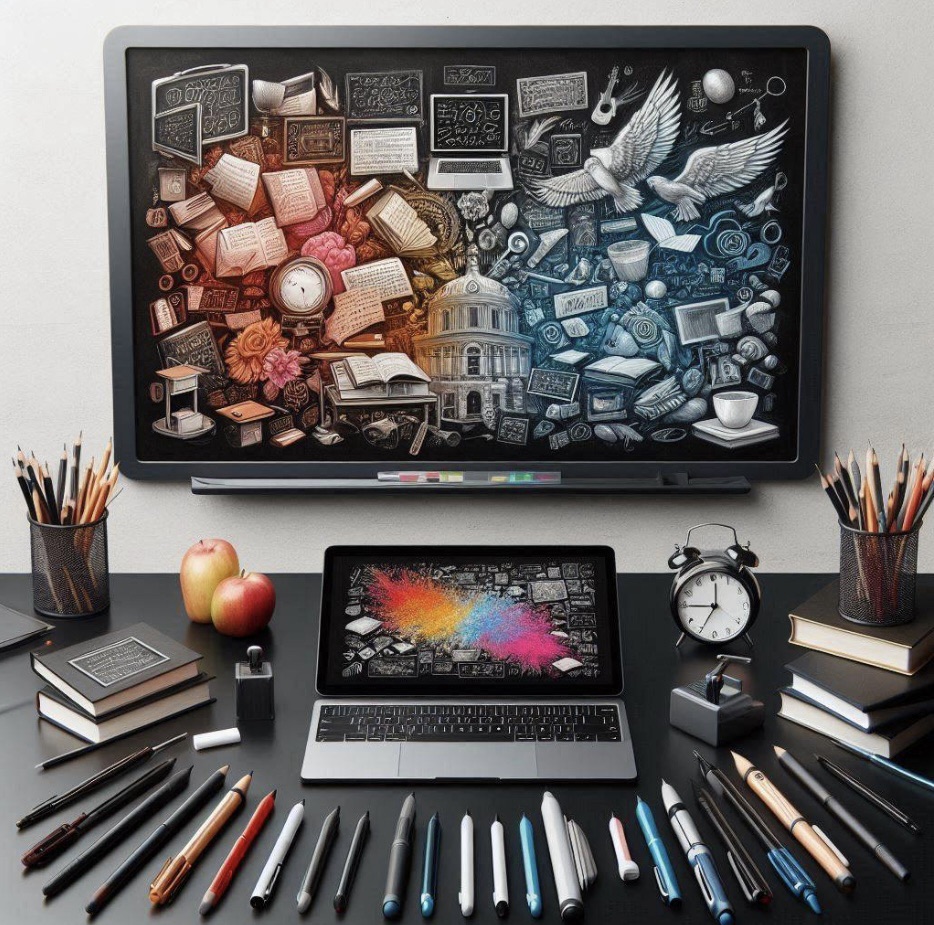
In the 1950s, the journey of learning to write in India, was marked by a progression through various writing tools and methods. As young children starting school, our first introduction to writing came through the use of a black slate with chalk. This humble beginning laid the foundation for our literacy and numeracy skills.
As we grew, we graduated to using a wooden slate known as a *phatti (फटी)*, accompanied by black ink and a carved pen-like instrument made from bamboo, called a *kalam (कलम)*. These tools required a certain finesse and care, instilling in us the values of patience and precision. Pencils were reserved for rough work, a testament to their less permanent nature.
Transitioning to middle school marked another milestone in our educational journey. The wooden slates and bamboo pens were replaced by paper notebooks and ink pens. This era of ink pens introduced us to a variety of writing experiences. The ink pens varied from the standard pilot pens to the more luxurious brands like Parker. Ink colors were a matter of personal preference and pride, with options ranging from Blue Black, Royal Blue, Sparkling Blue, Black, to Azure. Red and Green ink was reserved for the teaching staff. Quink was a standard brand of ink. Writing in English on four-lined cursive paper was a skill we diligently practiced, perfecting our penmanship with each stroke.
Ink pens also came with different types of nibs, from the basic steel nibs to the more expensive silver and gold-tipped ones. Despite the introduction of ink pens, lead pencils remained a constant companion throughout our academic journey. The 1980s saw the advent of ballpoint pens, but their use was discouraged in schools as they were believed to spoil one’s handwriting.
Fast forward to the present, and the landscape of writing and learning has drastically changed. Ink pens and traditional inks have become rare, often seen as luxury items used by the affluent. Brands like Sheaffer, Cross, Parker, Montegrappa, Lamy, Pelikan and Montblanc are now considered special and prestigious.
In schools and colleges, the black slate and chalk have been replaced by electronic slates. Students are now encouraged to use Chromebooks for their homework, and the once ubiquitous paper exercise books are now known as workbooks. Traditional blackboards are being phased out in favor of touch screen LEDs.
This technological shift signifies a broader change in the way handwriting is taught and valued. While electronic writing devices offer convenience and efficiency, the art of handwriting, cultivated through conventional methods, is slowly fading. Many of us developed fine calligraphy through years of practice, a skill that is becoming increasingly rare.
The elegance of conventional ink and the simple joy of writing with a pen are now largely confined to the past. The tools that once defined our educational experiences are now relics of a bygone era. Handwriting, once a cherished skill, is now “gone with the wind,” replaced by the digital convenience of today. However, the memories of learning to write with ink and pens remain a cherished part of our personal histories, a testament to a time when the written word was crafted with care and pride.
Guchi.
 Improve Your Life
Yes, a nostalgic journey.😢
LikeLiked by 2 people