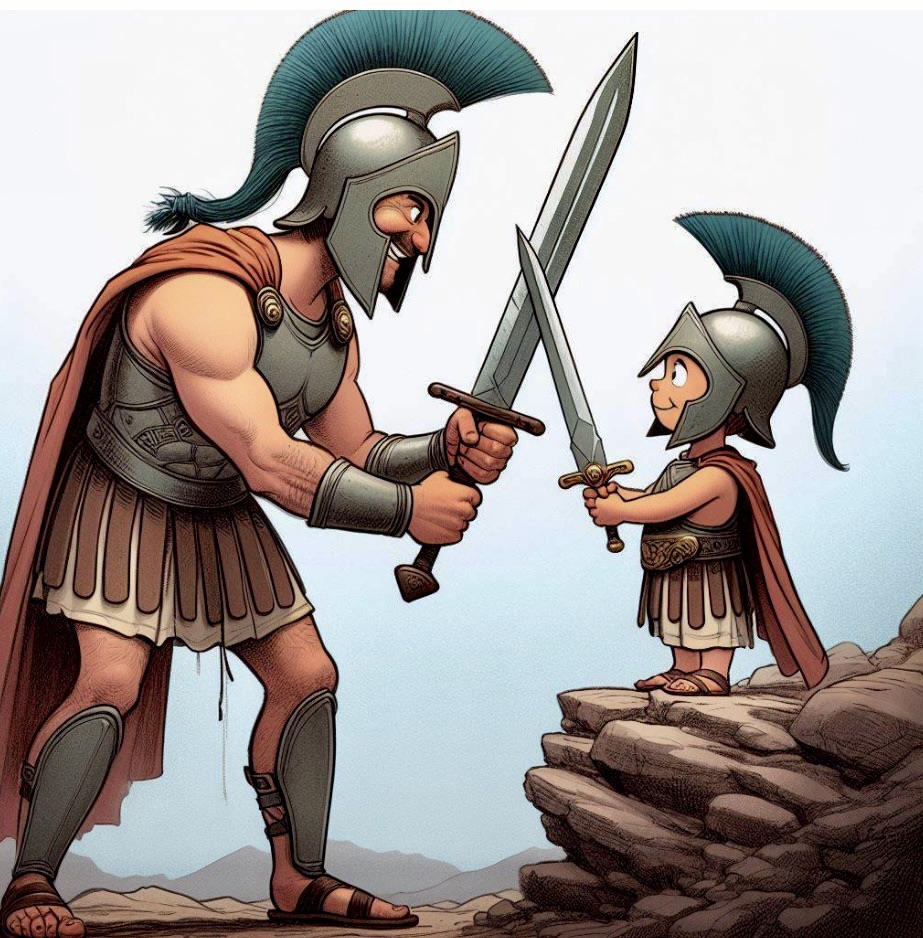
In the ancient city-state of Sparta (part of Ancient Greece), the approach to parenting was notably intense, centering on the cultivation of discipline, resilience, and physical prowess from a very young age. At the heart of this upbringing lay the renowned Agoge system, a rigorous state-sponsored education program designed to mold boys into formidable warriors. Beginning at the tender age of seven, boys were separated from their families and immersed in military-style training within barracks, where they underwent exhaustive physical and mental conditioning. Under the tutelage of seasoned instructors, they were schooled in the art of combat, mastering various martial skills, weaponry, and strategic maneuvers, all while learning the virtues of endurance and self-discipline.
Yet, Spartan parenting extended far beyond the confines of military instruction. Parents actively encouraged their offspring to engage in activities that pushed the boundaries of their physical and mental limits. Whether scaling treacherous mountain paths or braving encounters with dangerous wildlife, these experiences were crafted to instill qualities highly prized in Spartan society: resilience, courage, and self-reliance. Moreover, a strong emphasis was placed on maintaining peak physical fitness, with children actively participating in athletic competitions such as wrestling, running, and javelin throwing. These endeavors not only fostered physical strength but also cultivated a sense of camaraderie and healthy competition among the youth.
In addition to physical prowess, Spartan parents recognized the importance of practical skills in their children’s upbringing. While academic pursuits took a backseat, youngsters were imparted with essential knowledge in areas such as hunting, survival techniques, and rudimentary arithmetic. These skills were deemed indispensable for thriving in a society that highly esteemed self-sufficiency and resourcefulness.
The Spartan approach to parenting may strike modern sensibilities as extreme, yet it was forged out of necessity in a society perpetually threatened by invasion and conflict. Spartan children were groomed to be stalwart defenders of their city-state, ever-ready to answer the call to arms. While undeniably harsh, this upbringing yielded individuals of unparalleled strength, resilience, and valor.
Today, echoes of Spartan values resonate in various cultures across the globe. In regions of Asia, such as China, South Korea, and Japan, there exists a strong emphasis on academic excellence and rigorous educational standards, reflecting a similar dedication to discipline and resilience. In ancient India a similar system like Gurukul education system existed where students lived in Ashrams far away from their parents and were taught academic as well as other life conduct aspects. Similarly, in areas with deep-seated military traditions like Israel or Eastern Europe, physical fitness and self-defense training are prioritized from a young age, instilling values of discipline and fortitude.
Furthermore, rural communities worldwide embrace a Spartan-like emphasis on practical skills and self-sufficiency. Whether through farming, hunting, or outdoor exploration, children are taught invaluable lessons in resilience and resourcefulness from an early age.
However, in contrast to the Spartan model, modern societies generally advocate for a more balanced approach to child-rearing, recognizing the importance of nurturing a diverse range of skills and values beyond just physical and martial prowess.
Guchi.
 Improve Your Life