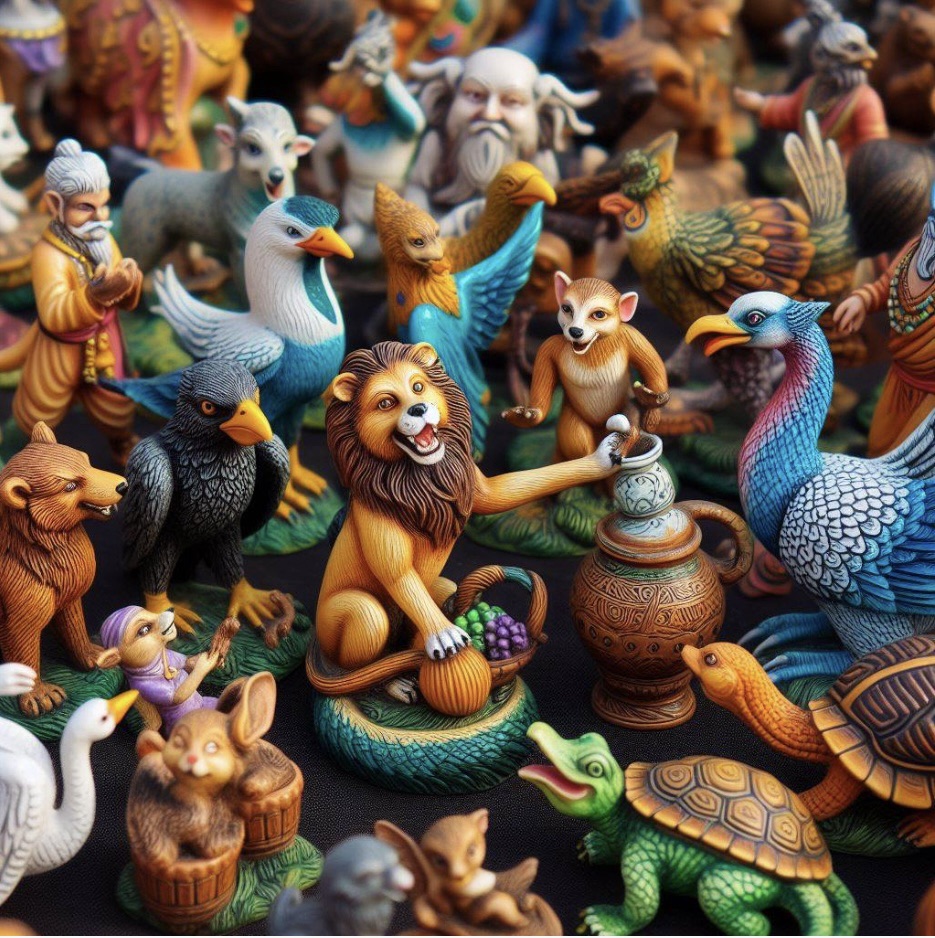
The Panchatantra comprises a collection of ancient Indian animal fables, originally composed in Sanskrit verse and prose, and set within a frame story. While its surviving manuscript is dated around 200 BC, the fables likely have much older origins.
Traditionally attributed to Vishnu Sharma, a sage purported to have lived in the court of King Amarasimha of Ayodhya, the actual authorship remains uncertain, suggesting it may have been written by multiple authors over time.
Divided into five books, each containing a series of interconnected fables, the Panchatantra includes:
1. **Mitra-bheda** (The Loss of Friends)
2. **Mitra-laabha** (The Gaining of Friends)
3. **Adhi-maudra** (The Crows and the Owls)
4. **Karna-suthra** (The Gaining of Wealth)
5. **Nakhala-khataka** (The Thief and the Parrot)
These fables are narrated to a young prince by his sagacious tutor, aiming to impart lessons in statecraft, diplomacy, and practical wisdom. Through clever animal protagonists, the stories illuminate themes such as friendship’s significance, the perils of greed, and the virtues of patience.
Translated into numerous languages, the Panchatantra has captivated audiences worldwide for centuries, earning its place as a cornerstone of Indian literature and a pivotal influence on storytelling and moral philosophy.
Among its most renowned tales are:
– The Lion and the Mouse
– The Hare and the Tortoise
– The Crow and the Pitcher
– The Farmer and the Jackal
– The Monkey and the Crocodile
These timeless stories continue to resonate with audiences today, offering enduring insights into the human condition.
Guchi.
 Improve Your Life