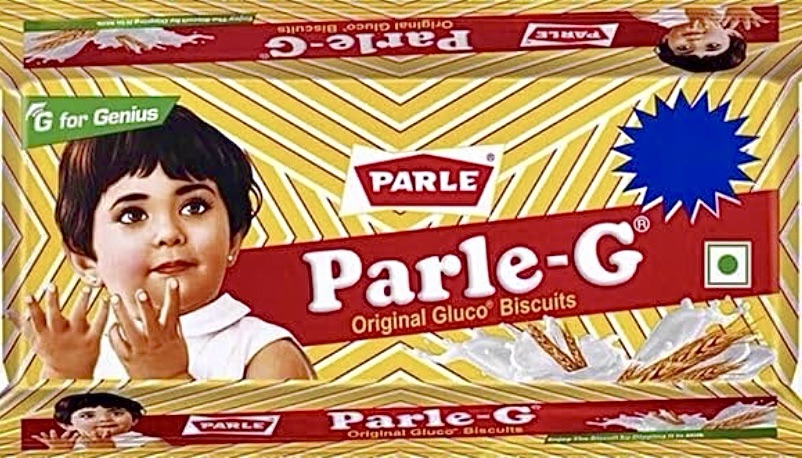
Parle-G, a brand that has seamlessly woven itself into the fabric of every Indian household, has not only stood the test of time but has also defied economic dynamics. The journey of Parle-G biscuits is not just about a snack; it’s a tale of adaptability and shrewd marketing that has sustained its popularity for decades.
The story begins with the inception of Parle-G in 1939 by the Parle Products company, then based in British India. The “G” in Parle-G stands for Glucose, reflecting its original purpose as a health biscuit. As the years rolled by, Parle-G became more than just a dietary supplement; it became a symbol of affordability and familiarity for generations of Indians.
One of the most intriguing aspects of Parle-G’s success is its consistent pricing. The price remains at five Indian rupees per packet from my childhood (7 years of age, when I was first introduced to this brand in my village) to my old age (73 years and living in a city) is a remarkable feat in a world where inflation is a constant reality. However, the secret lies not in resisting inflation but in a clever adjustment in the product itself.
The brand has ingeniously coped with economic changes by reducing the number of biscuits in each packet. Over the years, the quantity has diminished significantly, from 25 biscuits per pack 60 years ago to the current 7 biscuits. This subtle reduction has allowed Parle-G to maintain an affordable price point while adjusting to the economic landscape and yet gaining in selling volumes.
It’s a balancing act between offering an economical product for the masses and preserving the brand’s image. The unchanged logo, featuring a smiling child, further emphasizes a sense of continuity and reliability. While the child whose pic is on the packaging, has aged in reality (now 75 years old and fairly ugly) the image remains a nostalgic reminder of innocence and simplicity.
Parle-G’s strategy is a testament to the art of keeping up appearances and creating an illusion in marketing and consumerism. The brand has successfully managed to retain its charm among consumers who appreciate both the economic viability and the familiar taste of their favorite biscuits. The consumers range in India is a wide variety of people from labour, middle class and even some sophisticated one’s also who have developed a taste for this brand since their childhood. During free community services on the road sides, Parle G biscuits are served with tea during religious functions. Even dog lovers buy these packets to feed community dogs with Parle G biscuits.
Had the company chosen to increase the price in line with inflation while maintaining the original quantity, it might have alienated a significant portion of its loyal customer base – the common man who seeks affordability in his daily snack. Parle-G’s enduring success is a lesson in adaptability and understanding the pulse of the market.
As Parle-G continues to be a staple in Indian households, its story serves as an inspiration for businesses navigating the delicate balance between tradition and evolution in an ever-changing world. The brand’s ability to evolve without compromising its essence is a testament to its timeless appeal and a testament to the saying, “Old is gold.”
Guchi.
 Improve Your Life