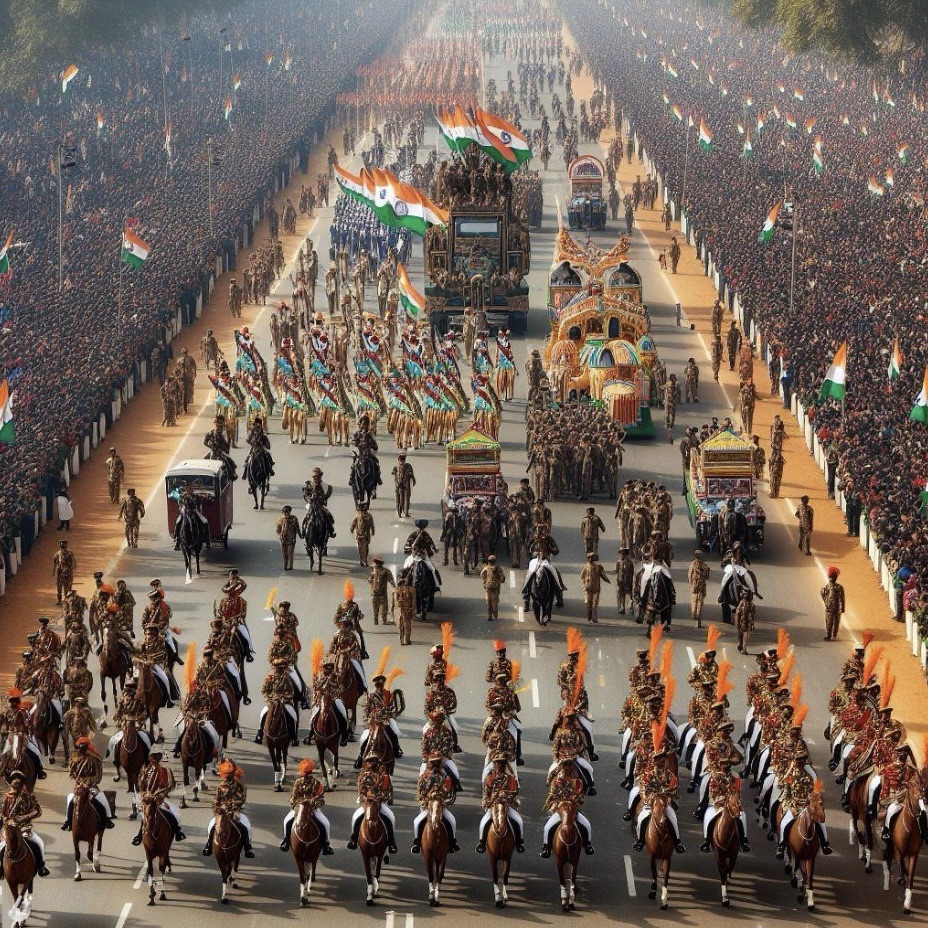
India’s Republic Day, celebrated on January 26th, holds significant
historical and cultural importance. Here are some interesting facts about this momentous day:
1. Constitution Adoption: Republic Day commemorates the adoption of the Constitution of India in 1950. The drafting of the Constitution was a monumental task led by Dr. B.R. Ambedkar, and its adoption marked India’s transition to a sovereign republic.
2. Historical Significance: January 26, 1930, was originally chosen as Independence Day by the Indian National Congress to celebrate the declaration of India’s independence from British rule. However, it was later shifted to January 26, 1950, to honor the enforcement of the Constitution.
3. Chief Guest Tradition: Each year, a prominent foreign dignitary is invited as the Chief Guest for the Republic Day parade in New Delhi. This tradition symbolizes India’s diplomatic relations with other nations. Notable guests have included Nelson Mandela, Barack Obama, and Shinzo Abe. This year, Mr. Emmanuel Macron, the President of France, is the honored Chief Guest.
4. First Republic Day Parade: The first Republic Day parade took place at the Irwin Stadium (now National Stadium) in New Delhi. Since then, the main event has been held at Rajpath (now known as Kartavya Path), showcasing India’s military prowess, cultural diversity, and technological achievements.
5. Beating Retreat Ceremony: The Beating Retreat ceremony marks the end of Republic Day festivities. It takes place on January 29th at Vijay Chowk in New Delhi. The event includes performances by the military bands and is a spectacular display of musical prowess.
6. Multiple Firsts in 1950: The 1950 Republic Day parade witnessed several firsts, including the display of India’s defense capabilities, a 31-gun salute to the President of India, and the unfurling of the national flag.
7. Nari Shakti: In recent years, Republic Day celebrations have emphasized the role of “Nari Shakti” (Women’s Power). All-women contingents from the armed forces and various cultural programs featuring women’s achievements are integral parts of the celebrations.
8. Cultural Heritage Showcase: The Republic Day parade showcases the rich cultural heritage of India through tableaux from different states and union territories. These depict diverse art forms, traditions, and achievements, providing a colorful panorama of the country.
9. Rajpath Decor: The entire stretch of Rajpath, now named Kartavya Path, from Rashtrapati Bhavan (President’s Residence) to India Gate, is beautifully decorated for the Republic Day parade. The decorations often follow a theme reflecting the nation’s aspirations and achievements.
10. Kite Flying. Tradition: In many parts of India, particularly in northern states, flying kites has become a traditional way to celebrate Republic Day. The vibrant kites soaring in the sky symbolize the spirit of freedom and unity.
January 26th is a momentous day for Indians, celebrating the formation of the Republic of India with genuine democratic and secular values. It serves as a reminder of citizens’ responsibilities towards the nation, fostering pride in its rich heritage. On this day, may God bless India (Bharat) as it continues to uphold its democratic ideals and cultural diversity.
(Compiled from historical facts)
Guchi.
 Improve Your Life