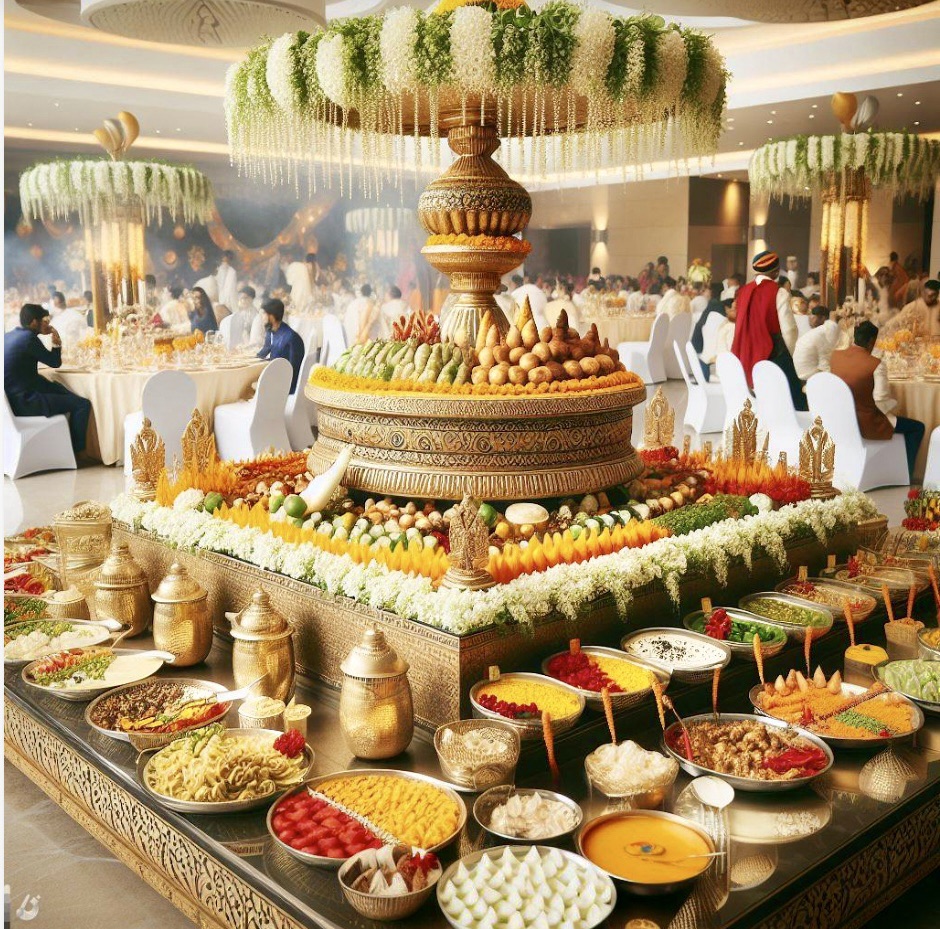
Buffets in India, once cherished communal feasts with bamboo structures, woven mats, and warm food served on leaf plates, have evolved into standard rituals for various functions. Be it marriages, birthdays, religious functions, anniversaries and kitty parties these gatherings have lost touch with the personal hospitality that characterized the old village feasts.
In the nostalgic scenes of communal feasts, a genuine sense of community, simplicity, tranquility, and environmental consciousness prevailed. Tents pitched with bamboo structures, mats spread on the floor, people sitting on woven cots – it was a wholesome tradition that fostered meaningful connections. Contrast this with today’s chaotic buffets featuring loud DJ music, formal tables laden with an array of dishes running into 50-100 varieties covering Indian, Chinese, Continental and what have you foods where people are more concerned about appearances than the joy of the meal. The shift is stark. The scenario is that of crowd bump into each other, spilling food and chaos. The whole thing smacks of snobbery and show off rather than genuine hospitality.
The current scenario portrays excessive, wasteful, and chaotic buffets where quantity often triumphs over quality. The experience becomes disheartening as people navigate through the noise and extravagance, missing the genuine sense of community and simplicity that once defined these gatherings.
As we reflect on these changes, there are two approaches to deal with the buffet dilemma. One can boldly confront the chaos, advocating for a return to the values of community, simplicity, and environmental consciousness. Alternatively, one can quietly opt for a more peaceful meal at home and then attend buffet without eating there but just to show presence, thus emphasising the importance of maintaining dignity amidst the buffet mayhem. The choice lies in striking a balance between the convenience of modern buffets and the richness of tradition, ensuring that our cultural rituals retain their essence in the evolving landscape of celebrations.
Guchi.
 Improve Your Life