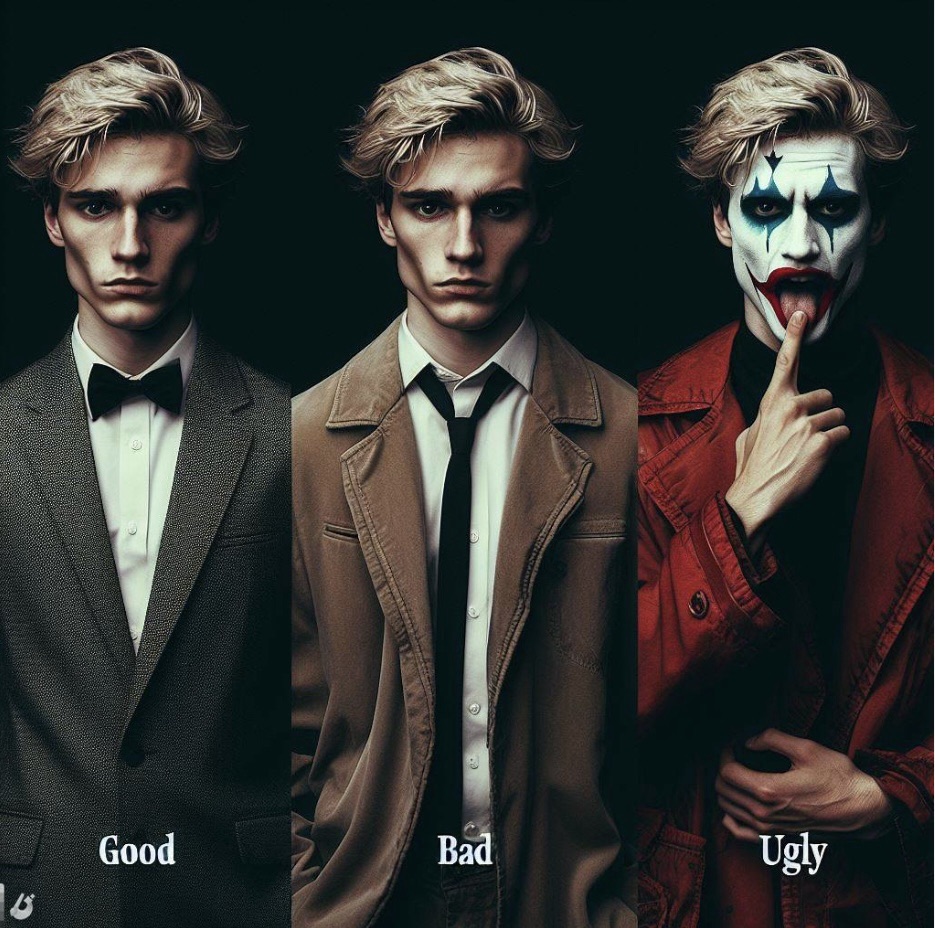
In the vast tapestry of Hollywood’s cinematic history, few films have left an indelible mark quite like “The Good, the Bad and the Ugly.” Directed by Sergio Leone and starring the iconic Clint Eastwood, this classic Western has not only stood the test of time but also serves as a metaphor for the multifaceted nature of human character.
The movie unfolds with three distinct characters, each embodying a different facet of humanity. The “Good,” portrayed by Clint Eastwood’s character, is the epitome of morality and righteousness. His actions are driven by a sense of justice, and his unwavering commitment to doing what is right sets the tone for the narrative.
Opposing the Good is the “Bad,” a character defined by inherent meanness and malevolence. This antagonist thrives on chaos and discord, showcasing the darker side of human nature. The Bad’s actions are a stark reminder of the capacity within us for cruelty and selfishness.
However, it is the third character, the “Ugly,” that adds a layer of complexity to the narrative. Unlike the clear moral compass of the Good and the unapologetic malevolence of the Bad, the Ugly operates in a realm of unpredictability and irrationality. The Ugly’s actions, often unregulated and seemingly stupid, reflect the chaotic nature of the human psyche.
In the grand theater of real life, each one of us is a mosaic of these three characters. There are moments when we embody the Good – compassionate, virtuous, and guided by a strong moral compass. Conversely, there are instances where the Bad surfaces, revealing our capacity for selfishness and moral ambiguity. The Ugly, representing the unregulated and irrational aspects of our behavior, emerges during times of stress, emotional turmoil, or sheer unpredictability.
Consider a scenario where a person volunteers at a local charity, showcasing their inherent goodness. However, when faced with personal challenges, they might act out of self-interest or exhibit traits that align more with the Bad. Furthermore, under extreme stress or pressure, individuals may make irrational decisions, akin to the Ugly character in the movie.
Understanding and accepting these shades within ourselves is a crucial aspect of personal growth. Human nature is not a binary of black and white; rather, it exists in a spectrum of gray. The circumstances, situations, and the ebb and flow of emotions play a significant role in shaping our responses.
Embracing the complexity within allows us to navigate the moral landscapes of our lives more authentically. Instead of casting ourselves as solely heroes or villains, acknowledging the coexistence of the Good, the Bad, and the Ugly enables a more nuanced understanding of our actions and motivations.
In conclusion, “The Good, the Bad and the Ugly” serves as more than a cinematic masterpiece; it serves as a mirror reflecting the intricacies of the human soul. Just as the characters in the movie are not confined to a single dimension, neither are we. Embracing the shades within is an invitation to explore the richness of our own humanity, recognizing that life’s narrative is a carpet woven with threads of virtue, darkness, and unpredictability.
Guchi.
 Improve Your Life