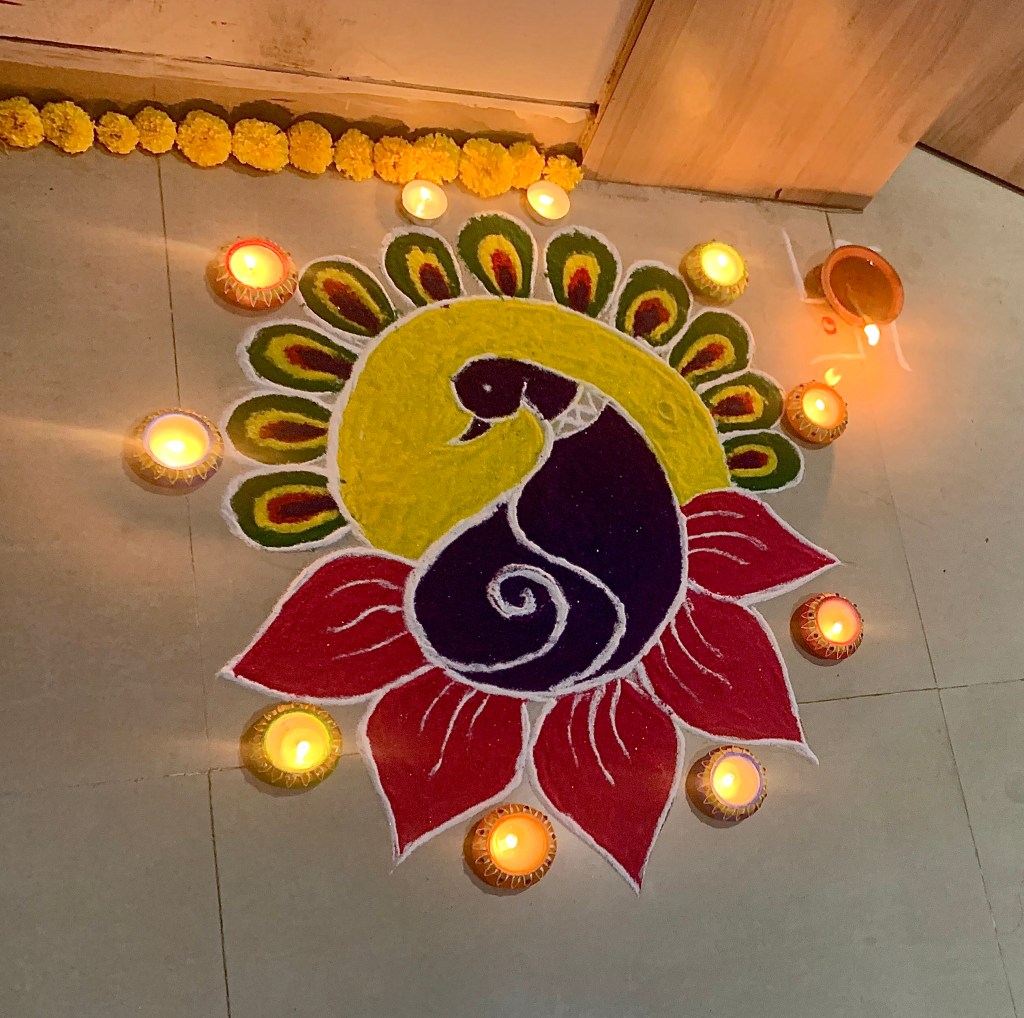
Rangoli is a traditional Indian art form that involves creating intricate patterns on the floor or ground using materials such as colored sand, rice flour, flower petals, and spices. It is typically created during festivals and other special occasions, and is believed to bring good luck and prosperity.
Origin of Rangoli
The exact origin of rangoli is unknown, but it is thought to have originated in India over 5,000 years ago. There are many legends and myths surrounding its creation, but one of the most popular is that it was created by the gods themselves.
One legend says that Lord Brahma, the creator god, created rangoli to welcome the goddess Lakshmi, the goddess of wealth and prosperity, into his home. Another legend says that Lord Krishna created rangoli to impress his wife, Radha.
Traditions of Rangoli
Rangoli is a deeply rooted tradition in Indian culture, and there are many different regional variations of the art form. In southern India, rangoli is known as kolam, and in northern India, it is known as chowkpurana.
Rangoli is typically created by women and girls, and is often passed down from mother to daughter. It is a social activity that brings people together, and is a way to express one’s creativity and devotion to the gods.
Rangoli and Indian Art
Rangoli is a unique form of Indian art that is both beautiful and symbolic. The intricate patterns and designs often represent aspects of Indian culture, such as nature, religion, and mythology.
Rangoli is also a form of ephemeral art, as it is typically swept away after a few days. This reflects the Hindu belief in the impermanence of all things.
Significance of Rangoli
Rangoli is significant in Indian culture for a number of reasons. It is a way to:
* Welcome guests and deities into the home.
* Bring good luck and prosperity.
* Express one’s creativity and devotion to the gods.
* Decorate the home and community for festivals and special occasions.
* Celebrate the beauty of nature and the changing seasons.
Rangoli in Modern Times.
Rangoli is still a popular art form in India today, and is practiced by people of all ages and backgrounds. It is also becoming increasingly popular in other countries around the world.
Rangoli is now being used in a variety of new and creative ways. For example, it is being used to create murals, fashion designs, and even food art. Rangoli is a beautiful and significant art form that is deeply rooted in Indian culture. It is a way to express one’s creativity, devotion, and celebration of life.
Guchi.
 Improve Your Life