The Gambler’s Fallacy, a cognitive bias where past events are believed to influence future outcomes, isn’t just limited to casinos. It creeps into everyday decisions, affecting how we plan families, invest in stocks, anticipate sports victories, job hunt, and navigate relationships. This article explores the ubiquity of the Gambler’s Fallacy in real life and underscores the importance of understanding this cognitive bias.
Understanding the Gambler’s Fallacy
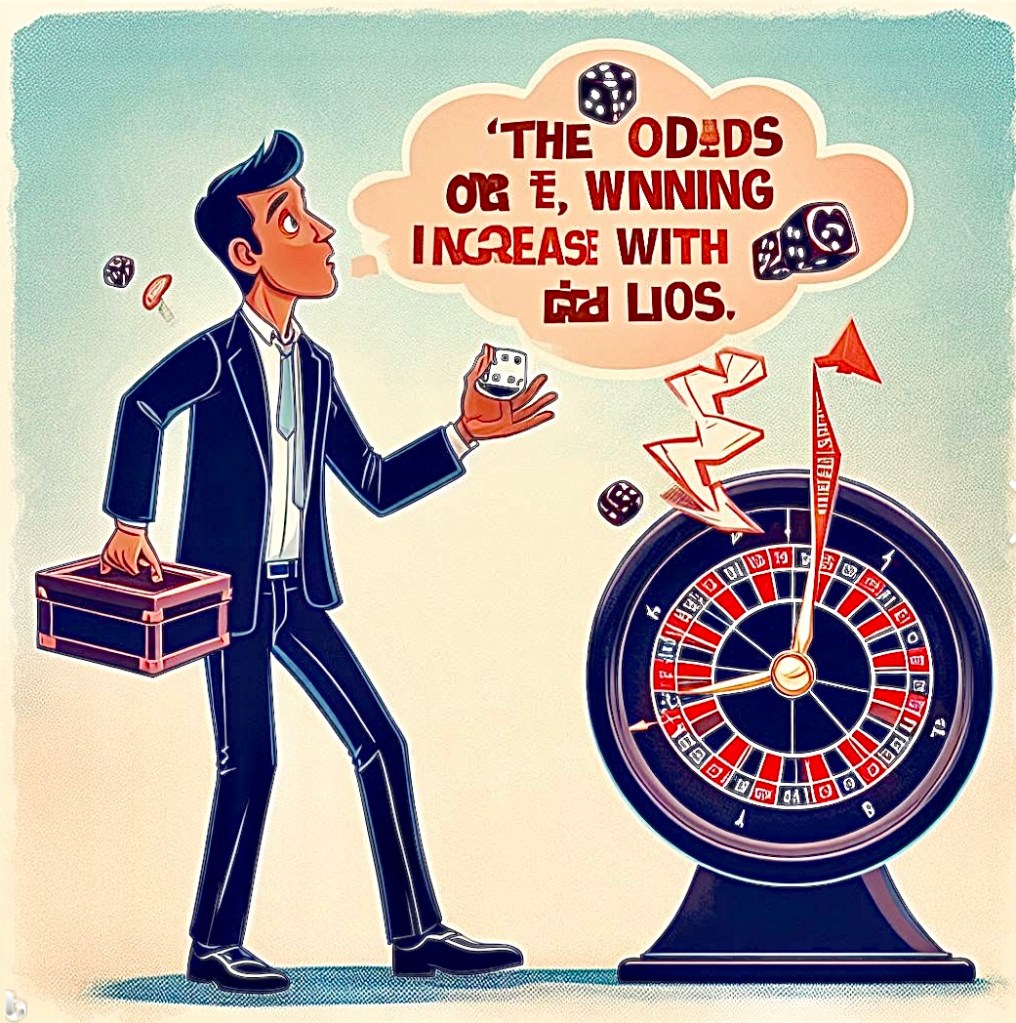
At its core, the Gambler’s Fallacy arises from a misunderstanding of probability. Picture a roulette game where the ball lands on black multiple times. Some might think that red is “due” because there should be a balance between black and red outcomes. This misconception can lead to irrational choices like increasing bets, expecting red to show up, and assuming it’s “bound to happen.”
In reality, each spin of the roulette wheel is independent, and the odds of red or black remain unchanged. Previous spins don’t affect future ones in games of chance. This misinterpretation leads to unwise decisions driven by unfounded expectations.
Real-Life Applications
1. **Family Planning:** The Gambler’s Fallacy plays a role when parents hope for a specific gender for their child. For example, a couple with two daughters may believe that their next child is more likely to be a boy. In truth, the probability of gender remains around 50-50, unaffected by previous children’s gender.
2. **Stock Markets:** Investors often fall prey to this fallacy. After a prolonged market downturn, they may assume a bull run is imminent and invest more, thinking the market is “due” for recovery. But market trends are independent of past performance; a grounded analysis should guide investment decisions.
3. **Sports:** Even sports fans can succumb to this fallacy. A team on a losing streak might be expected to win the next game, but each match is unique, and past outcomes don’t dictate future results.
4. **Job Search:** Job seekers can also be influenced. Multiple rejections might lead to the belief that the next interview is more likely to succeed. However, each application is evaluated independently, and past failures don’t increase future chances.
5. **Relationships:** In romantic relationships, past failures can lead to misguided decisions. A history of unsuccessful relationships shouldn’t influence the outlook on future ones.
Conclusion
The Gambler’s Fallacy seeps into various aspects of life, fueled by a misunderstanding of probability. Recognizing it is vital for making informed choices. Whether in family planning, financial decisions, or daily life, understanding the Gambler’s Fallacy helps us make more rational and effective decisions.
Guchi.
 Improve Your Life