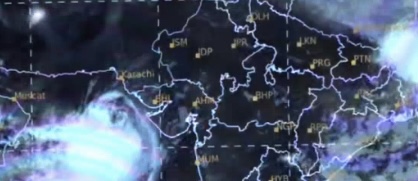
As of now, at 6 PM on June 15, 2023, Cyclone Biparjoy is a very severe cyclonic storm located 20-30 Kms South West of Run of Kutch. It is about to make landfall ( between 6 PM to 10 PM) on the coast of Gujarat, near Jakhau Port. It is moving north-northeastward at 7 km/h (4 knots) and has a maximum sustained wind speed of 120 km/h.
The India Meteorological Department (IMD) has issued a red alert for Gujarat and a yellow alert for Maharashtra and Karnataka. The IMD has warned of heavy to very heavy rainfall in Gujarat, Maharashtra, and Karnataka. The IMD has also warned of high winds, storm surges, and flooding.
Let us now discuss as to how these cyclones/hurricanes are named in various oceans of the world.
Hurricanes/ Cyclones are named differently depending on the ocean basin in which they occur. Here’s an overview of how hurricanes are named in various oceans:
1. Atlantic Ocean: In the Atlantic Ocean, including the Caribbean Sea and the Gulf of Mexico, hurricanes are named by the National Hurricane Center (NHC) of the United States. The NHC follows a predetermined list of names that are rotated every six years. The list consists of both male and female names, and they are organized alphabetically. For example, the first hurricane of the season is given a name starting with the letter “A” (e.g., Hurricane Andrew), the second with the letter “B” (e.g., Hurricane Bonnie), and so on. If a particularly destructive hurricane occurs, its name may be retired and replaced with a new name in the future.
2. Eastern North Pacific Ocean: In the Eastern North Pacific Ocean, which includes the waters off the western coast of Mexico and the southwestern United States, hurricanes are also named by the NHC. Similar to the Atlantic, a predetermined list of names is used. The naming convention and process are the same as in the Atlantic basin.
3. Western North Pacific Ocean: The Western North Pacific Ocean is the most active tropical cyclone basin in the world. Here, tropical cyclones, including typhoons and super typhoons, are named by various meteorological agencies of the countries in the region. For example:
• Japan Meteorological Agency (JMA) names typhoons that affect Japan.
• Philippines Atmospheric, Geophysical and Astronomical Services Administration (PAGASA) names typhoons that enter or develop within the Philippine Area of Responsibility.
• China Meteorological Administration (CMA) names typhoons affecting China.
4. Each agency follows its own naming system and typically uses names of animals, flowers, mythological figures, or personal names. The naming lists are often reused after several years.
5. Indian Ocean: In the Indian Ocean, tropical cyclones are named by the Regional Specialized Meteorological Center (RSMC) in New Delhi, India. They follow a naming convention agreed upon by eight countries in the region: India, Bangladesh, Maldives, Myanmar, Oman, Pakistan, Sri Lanka, and Thailand. The naming lists are maintained and rotated by each country, and the names are selected based on cultural, historical, and geographical significance.
6. Southern Hemisphere: In the Southern Hemisphere, which includes the South Indian Ocean, South Pacific Ocean, and the Australian region, tropical cyclones are named by various meteorological agencies of the respective countries. For example:
• Australia’s Bureau of Meteorology (BOM) names tropical cyclones that form in the Australian region.
• Meteorological Service of New Zealand Limited (MetService) names tropical cyclones that affect or have the potential to affect New Zealand.
7. These agencies follow their own naming systems, often using names from predetermined lists that are rotated annually or every few years.
It’s important to note that the naming of hurricanes or tropical cyclones serves practical purposes, such as facilitating communication, tracking, and public awareness of these severe weather events.
Researched from web resources.
Guchi.
 Improve Your Life
Well written 👍🏻
Visit my blog too. I have written on how cyclones are formed
LikeLike
Thank you.
LikeLiked by 1 person