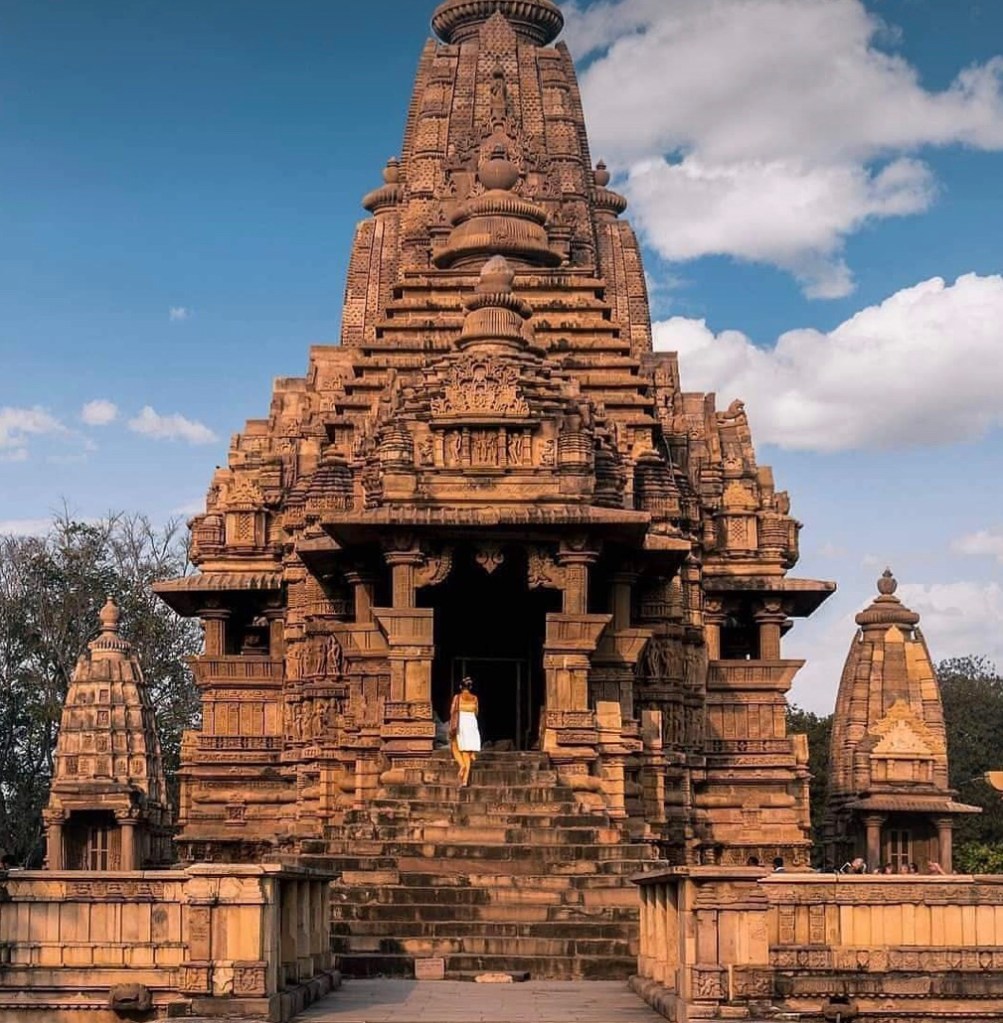
The Temples of Khajuraho are a group of Hindu and Jain temples located in Khajuraho, a small town in the Chhatarpur district of Madhya Pradesh, India. These temples are known for their exquisite architecture and intricate carvings, including depictions of various aspects of life, including erotic art.
Origin:
The temples of Khajuraho were built between the 9th and 11th centuries during the Chandela dynasty. The exact reason for the construction of these temples is not entirely clear. However, it is believed that the Chandela rulers built them to showcase their devotion to the deities and to establish their power and authority. The temples were dedicated to both Hindu and Jain deities, reflecting the religious tolerance and diversity prevalent during that time.
Erotic Art:
One of the distinctive features of the Khajuraho temples is the presence of erotic art. The erotic sculptures and carvings are found on the outer walls of some of the temples. These depictions showcase various aspects of human life, including sensuality, love, and intimacy. It is important to note that the erotic art is just a small part of the overall artwork in the temples and does not represent the entire theme of the temple complex.
Purpose and Nuisances:
The purpose of the erotic art in the Khajuraho temples has been the subject of debate among scholars and historians. Some theories suggest that the explicit carvings were meant to depict the joys and pleasures of life as a part of a larger spiritual journey. These sculptures were seen as a celebration of the union between the male and female energies, representing the concept of divine harmony and the integration of the physical and spiritual realms.
Another perspective is that these explicit carvings served as a way to ward off evil spirits or act as a form of tantric ritual. According to this view, the sculptures were placed on the outer walls of the temples to act as a symbolic protection against negative forces.
It’s worth noting that the erotic art at Khajuraho temples is not intended to be vulgar or obscene in nature. The carvings are highly intricate and artistically done, showcasing a deep understanding of human anatomy and emotions. They are considered a testament to the artistic and architectural excellence of the Chandela period.
In recent times, the erotic art of the Khajuraho temples has attracted significant attention from tourists and scholars. While the temples have become a popular tourist destination, it is essential to approach these artworks with cultural sensitivity and respect for their historical and religious context.
It’s important to understand that the Khajuraho temples are not solely defined by their erotic art. They represent a much broader architectural and artistic heritage, including intricate sculptures depicting various deities, celestial beings, musicians, dancers, and everyday life scenes. These temples are recognized as a UNESCO World Heritage Site and are considered masterpieces of Indian art and architecture.
(Compiled fom the web resources)
Guchi.
 Improve Your Life