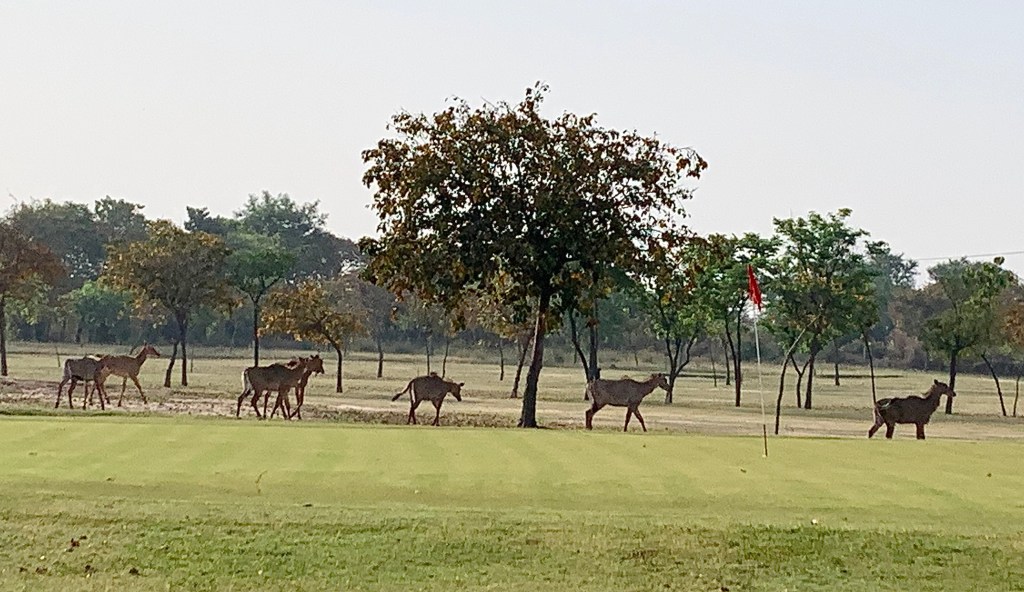
Today while playing Golf at ATS Golf Course Derabassi near Chandigarh India, I came across a herd of Blue Bulls walking on a Golf green. I immediately took out my IPhone and took photographs of these majestic animals. Thereafter I did a bit of digging around about this animal on the web and found interesting facts about them.
Blue bulls, also known as the Nilgai (Boselaphus tragocamelus), are large antelopes native to the Indian subcontinent. Here is some information about their habitat, behavior, and other characteristics:
Habitat. Blue bulls are found throughout the Indian subcontinent, from Pakistan to Nepal and Bangladesh. They inhabit a variety of habitats, including open grasslands, scrub forests, and agricultural fields.
Appearance. Blue bulls are large and robust antelopes, with males typically weighing between 180 and 300 kg and standing up to 1.5 meters tall at the shoulder. They have a grayish-blue coat, with males having short horns and a distinctive white throat patch.
Behaviour. Blue bulls are primarily diurnal, meaning they are active during the day. They are social animals, typically living in small herds consisting of a dominant male, several females, and their young. Blue bulls are also known for their territorial behavior, with males marking their territory with scent and engaging in ritualized displays to intimidate rivals.
Diet. Blue bulls are herbivores, primarily grazing on grasses and other vegetation. They are also known to feed on crops, which can bring them into conflict with farmers.
Conservation status. Blue bulls are considered a species of least concern by the International Union for Conservation of Nature (IUCN), as they are widespread and relatively common throughout their range. However, habitat loss and hunting remain threats to their populations in some areas. In India Blue Bulls (Nilgai) fall under the category of Protected species.
Guchi.
 Improve Your Life